 how-to
Best Time of Day to Check In for Room Upgrades
Table of Contents
- Why Check-In Timing Decides Your Room Upgrade
- Housekeeping Schedules and Occupancy Levels: The Real Upgrade Math
- Hotel Upgrade Scripts: What to Say at the Front Desk
- How to Ask for a Hotel Upgrade (Without Sounding Entitled)
- Early Check-In vs Room Upgrade: Which Should You Choose?
- Mobile Check-In vs. the Front Desk: Where Upgrades Actually Happen
- Conclusion
- Frequently Asked Questions
Last Updated: September 12, 2026
Why Check-In Timing Decides Your Room Upgrade
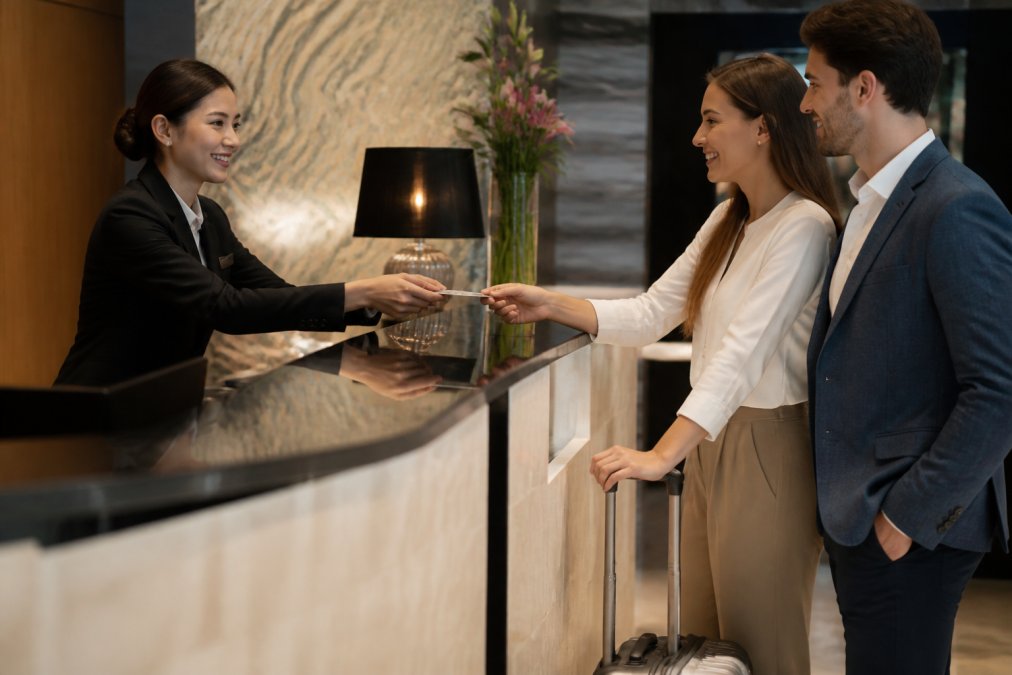
The best time of day to check in for room upgrades is late afternoon, typically between 3 and 6 PM, when room upgrades are most likely to be granted (hospitalitynet.org). By then, housekeeping has finished its inventory sweep, the front desk can see which rooms will sit empty overnight, and the property knows what it has to give away.
This guide breaks down why that window works, when it fails, and how to time your arrival so the front desk has both the inventory and the reason to move you up.
A hotel cannot upgrade you into a room it still expects to sell. Until the day's arrivals and departures settle, the front desk guards inventory.
How Room Availability Changes Through the Day
Room availability shifts hour by hour. Morning arrivals compete with the previous night's departures, so housekeeping is still catching up. By midday, most standard rooms are clean, but suites are still held for potential late bookings.
Late afternoon flips the math. Unsold premium rooms become a cost, not an asset. That is when a complimentary upgrade becomes a reasonable trade for a happier guest.
Why Late Afternoon Is the Sweet Spot
Late afternoon works because occupancy levels are finally readable. The front desk can see which elite guests have arrived, which suites went unbooked, and how many walk-ins to expect. A room still empty at 5 PM will likely stay empty.
Housekeeping Schedules and Occupancy Levels: The Real Upgrade Math
Housekeeping status drives every upgrade decision, but the mechanism is more specific than "the room is clean." A room passes through several states before it becomes upgrade-eligible.
The Room Status Pipeline
In most Property Management Systems, a room moves through a defined sequence:
- Occupied, a guest is still in it.
- Vacant dirty, the guest checked out, housekeeping has not started.
- Vacant clean, housekeeping finished, but a supervisor has not inspected it.
- Inspected / ready, the room is cleared for assignment.
Suites and premium rooms take longer to turn than standard rooms because they have more square footage, more amenities to restock, and sometimes a separate inspection standard. A hotel can have plenty of standard rooms ready at 1 PM while premium inventory is still vacant-clean. Arrive before those rooms are inspected and the system will not let the front desk assign them.
Revenue Management Holds
Even after a suite is inspected, it may not be releasable. Revenue management often holds premium inventory until a cutoff time, hoping to sell it at full rate to a late booking or walk-in (hsmai.org). The hold typically releases in the late afternoon, once the property sees the room will not sell.
That release is the real reason late afternoon works: the system finally marks the room as available to give away.
Occupancy Levels Do the Rest of the Work
On a sold-out night, upgrade probability drops to near zero because every room has a buyer. On a soft night, moving you up costs nothing and earns goodwill. The table below reflects the pattern most front desk teams describe:
| Scenario | Occupancy Level | Upgrade Probability | Best Move |
|---|---|---|---|
| Midweek, off-peak | Low | High | Arrive late afternoon, ask politely |
| Weekend, peak season | High | Low | Request pre-arrival, manage expectations |
| Sold-out night | Full | Near zero | Ask for late check-out instead |
| Multi-night stay | Mixed | Moderate to high | Mention length of stay at check-in |
Business Hotels vs. Leisure Resorts: Different Upgrade Logic
Property type changes the math more than most travelers realize.
Business-heavy city hotels empty out Thursday and Friday nights as corporate travelers head home. Sunday and Monday arrivals often land in a soft house, which is why a Sunday-night stay downtown can produce an upgrade that would never happen on a Tuesday. These hotels also tend to have generous elite recognition.
Leisure resorts invert the pattern. Weekends and holidays are peak, midweek is soft, and a Tuesday or Wednesday arrival at a beach or ski property often beats a Saturday. Resorts hold premium inventory longer because they sell packages and upgrades as paid products, so complimentary upgrades are rarer and more dependent on loyalty tier.
Airport and convention hotels swing with event calendars. If a major convention is in town, upgrade odds collapse regardless of the day. If the calendar is clear, the same property can be wide open.
How Length of Stay and Elite Status Shift the Odds
Length of stay is one of the strongest levers you control. A five-night guest is worth more to the property than a one-night stay. Mention the full duration at check-in.
Loyalty status matters too. Elite guests are often upgraded first because the property is contractually obligated to recognize them. If you hold status, say so at the desk. If not, your best tools are timing, property type, and a clear pre-arrival message.
Hotel Upgrade Scripts: What to Say at the Front Desk
The right hotel upgrade scripts turn a request into a conversation. The goal is to give the front desk agent a reason to help you, not to pressure them.
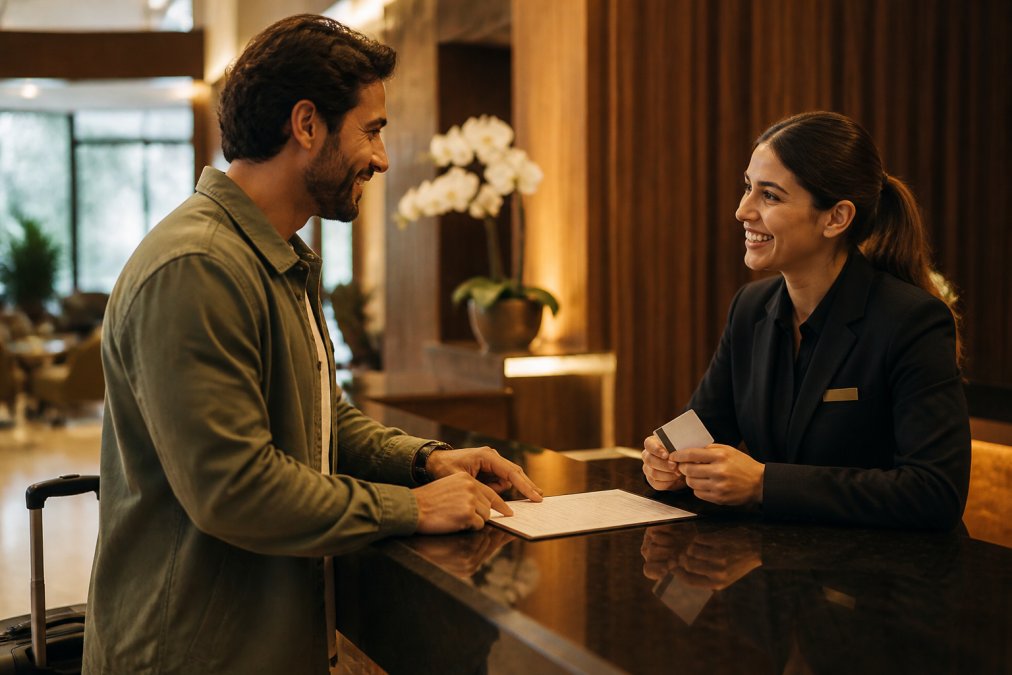
A soft ask works better than a demand. Try: "I know you're busy, but if anything opens up in a larger room, I'd be grateful. We're celebrating our anniversary and staying four nights." That gives the agent three reasons to look: flexibility, occasion, and length of stay.
How to Ask for a Hotel Upgrade (Without Sounding Entitled)
Asking well starts with respect for the person at the check-in desk. Front desk agents field dozens of requests a shift, and the guests who get upgrades usually made the interaction easy.
A few rules that hold up in practice:
- Lead with a greeting and use the agent's name if it is visible on a badge
- Frame the request as a question about availability, not a demand
- Mention one concrete reason: a celebration, a long stay, or a repeat visit
- Accept "no" gracefully and ask about late check-out instead
- Thank them regardless of the outcome
You are asking a person to do you a favor within the limits of their system. Make it easy for them, and they often will.
Early Check-In vs Room Upgrade: Which Should You Choose?
You usually cannot have both. Early check-in vs room upgrade is a real trade-off, and picking the wrong one costs you the better outcome.
Early check-in means arriving before the standard window, often before housekeeping has cleared premium inventory. You get your room sooner, but you get the room you booked. An upgrade requires waiting until the property knows what it can release, which is why late afternoon wins.
| Priority | Best Choice | Why |
|---|---|---|
| Need to freshen up fast | Early check-in | Room is ready, no waiting |
| Want a better room | Late afternoon arrival | Inventory is readable |
| Traveling with kids | Early check-in | Predictability beats a bigger room |
| Celebrating an occasion | Late afternoon arrival | Front desk has room to say yes |
If your flight lands at noon and you cannot wait, ask the front desk to store your bags and note your reservation, then return in the late afternoon and make your soft ask. You get the early arrival and a second shot at the upgrade.
Mobile Check-In vs. the Front Desk: Where Upgrades Actually Happen
Most complimentary upgrades are decided before you ever touch a key card, and the channel you choose at check-in only matters for the leftovers.
How Property Management Systems Assign Rooms Before You Arrive
Nearly every full-service hotel runs a Property Management System (PMS), software holding reservations, room inventory, and housekeeping status (hospitalitynet.org). Well-known platforms include Oracle Hospitality OPERA Cloud, Mews, Cloudbeds, and Agilysys. Most include an auto-assignment or "room blocking" routine that runs on a property-set schedule, often the night before arrival or the morning of.
That routine does three things at once:
- It matches each reservation to a physical room number based on room type, bed configuration, and length of stay.
- It applies loyalty tier rules, so elite members are slotted into the best available rooms within their booked category first.
- It flags special requests, connecting rooms, high floors, accessible features, and tries to satisfy them before a human ever looks at the list.
By the time you open the app, the assignment is usually already made, and mobile check-in simply confirms it. That is why app check-in rarely produces an upgrade: you accept the room the algorithm chose.
Why the Front Desk Still Has Override Power
The front desk agent works in the same PMS but with permissions the app lacks. A trained agent can:
- Reassign you to a different room number in the same category at no cost to the hotel.
- Move you up a category if the higher category is still unsold and the revenue manager has released it.
- Apply a loyalty override, comp amenity, or goodwill credit that the automated system would never authorize on its own.
That human override is why in-person check-in still matters. The algorithm optimizes for the hotel's inventory plan; the agent optimizes for the guest in front of them.
The Pre-Arrival Move That Beats Both
If upgrades are decided before arrival, the highest-leverage action is not choosing a check-in channel but communicating before auto-assignment runs. A short message through the hotel's app, a reply to the confirmation email, or a call the day before arrival can land in the queue the front desk reviews when finalizing room blocks.
A pattern that works:
- Confirm your reservation number and dates.
- State one specific, easy-to-honor request ("a higher floor if available" or "a room away from the elevator").
- Mention a relevant detail, loyalty number, a celebration, or a multi-night stay.
- Close with thanks and no pressure.
That message does two jobs. It gets your name in front of a human before the algorithm locks the room, and it gives the agent a reason to remember you when you walk in.
When Mobile Check-In Is Actually the Right Call
Mobile check-in is not a mistake, it is optimized for a different goal. Use it when:
- You are arriving late and want to skip the desk line.
- You are staying one night and an upgrade is unlikely anyway.
- You already hold top-tier elite status and the PMS will upgrade you automatically.
- You want a digital key and no human interaction.
Skip it when the upgrade is the point of the trip. Walk to the desk, greet the agent, and make your soft ask. The app confirms the plan. The desk can change it.
Conclusion
Timing your arrival is one of the few upgrade levers fully within your control, and most travelers never use it. The 3 to 6 PM window, paired with a polite soft ask and a clear reason, gives the front desk both the inventory and the motivation to move you up.
Sand and Sun Travels, backed by Fora Travel and fluent in English and Spanish, uses exclusive industry partnerships to secure VIP upgrades, resort credits, and amenities you cannot book online. We provide real human support before, during, and after your trip, so a cancelled flight or a lost reservation gets fixed by a person, not a chatbot. Get started with Sand and Sun Travels and let our team request the room you actually want.
Frequently Asked Questions
What is the best time to check into a hotel for an upgrade?
Late afternoon, between 4 and 6 PM, gives you the best shot at room upgrades. By then, housekeeping has finished most rooms, the front desk can see which suites are still unclaimed, and same-day no-shows have been flagged. Arriving after the standard check-in window means the agent has real-time room inventory to work with instead of guessing at what might open up.
What should you say to the front desk to get a free room upgrade?
Keep it warm and low-pressure. Try something like: 'We're celebrating our anniversary, and if there's any chance of a nicer room tonight, we'd be thrilled.' Then stop talking and let the agent respond. A soft ask works better than a demand because it gives staff room to say yes without feeling cornered. If they can't upgrade you, ask about late check-out or a resort credit instead.
Does checking in later in the day increase your chances of an upgrade?
Yes, to a point. Later arrivals benefit from clearer room availability and more flexible housekeeping status. But arriving after 9 PM can backfire if the hotel is near capacity and the best rooms are already taken. The window between 4 and 6 PM balances both: enough time for rooms to turn over, but early enough that premium inventory hasn't been assigned.
How do elite status and loyalty programs impact upgrade availability?
Elite status moves you to the front of the upgrade line. Hotels track guest profiles, and loyalty tiers often include complimentary upgrades when space allows, especially at check-in. That said, status isn't a guarantee during peak demand. Combining elite perks with a late-afternoon arrival and a polite ask still gives you the strongest position. If you book through a travel advisor with industry partnerships, those VIP benefits can stack on top of your loyalty perks.