 how-to
Bilingual Travel Planning for Spanish Speakers
Table of Contents
- Why Bilingual Travel Planning Matters for Spanish Speakers
- Step 1: Research Your Destination and Regional Dialects
- Step 2: Master Essential Travel Phrases and Communication Skills
- Step 3: Book Flights, Accommodation, and Activities
- How to Book Luxury Cruise Vacations as a Bilingual Traveler
- Creating Customized Travel Itineraries for Families
- Benefits of Using a Travel Advisor for Bilingual Planning
- Common Mistakes to Avoid When Planning Bilingual Travel
- Frequently Asked Questions
Last Updated: August 21, 2026
Why Bilingual Travel Planning Matters for Spanish Speakers
Bilingual travel planning removes friction at every stage of your journey, from booking accommodations to navigating unexpected situations. When you anticipate language needs upfront, book with providers who understand bilingual communication, and prepare region-specific vocabulary, you create space for genuine connection with your destinations rather than struggling with logistics.
At Sand and Sun Travels, we've worked with many bilingual families who discovered that thoughtful planning across both languages transforms the entire experience. This guide walks you through a practical, step-by-step approach to bilingual travel planning that addresses real challenges: researching regional dialects, mastering essential phrases for specific situations, booking accommodations and activities with bilingual support, and creating customized travel itineraries that work for your family's actual needs.
Step 1: Research Your Destination and Regional Dialects
Understanding your destination begins with recognizing that Spanish isn't monolithic. The Spanish spoken in coastal Mexico differs from the Spanish in Argentina, which sounds entirely different from the Spanish in Spain. Regional dialects, local slang, and pronunciation variations can catch even fluent speakers off guard.
Understanding Regional Variations in Spanish
Regional dialects matter because they affect real-world communication. The word for "car" changes from "coche" in Spain to "carro" in Colombia to "auto" in Argentina. When booking accommodations or asking for directions, hearing the local variation helps you understand responses accurately.
Create a simple reference document before your trip. List 10-15 common words and phrases specific to your destination's dialect, including variations for transportation, food ordering, and basic questions. Watch local news clips or YouTube videos from your destination region. Hearing native speakers use their dialect in real contexts gives you exposure to authentic pronunciation and phrasing.
Gathering Essential Travel Information
Research your destination's practical travel landscape: public transportation systems, how locals book hotels, peak seasons, and health and safety considerations. Use official tourism websites, recent travel blogs from bilingual travelers, and community forums where Spanish speakers discuss travel experiences.
Document specific information in both languages: names of major hotels and attractions, phone numbers for local emergency services, addresses of hospitals or clinics, and contact information for your accommodation. When you're in a stressful situation, having this information already organized in both languages saves critical time.
Step 2: Master Essential Travel Phrases and Communication Skills
Essential travel phrases are your toolkit for handling real situations: checking into a hotel, ordering food, asking for directions, addressing problems. Focus on phrases you'll actually use, not textbook examples. Confidence in your phrasing makes a measurable difference in how service providers respond to you.
Accommodation and Dining Etiquette Phrases
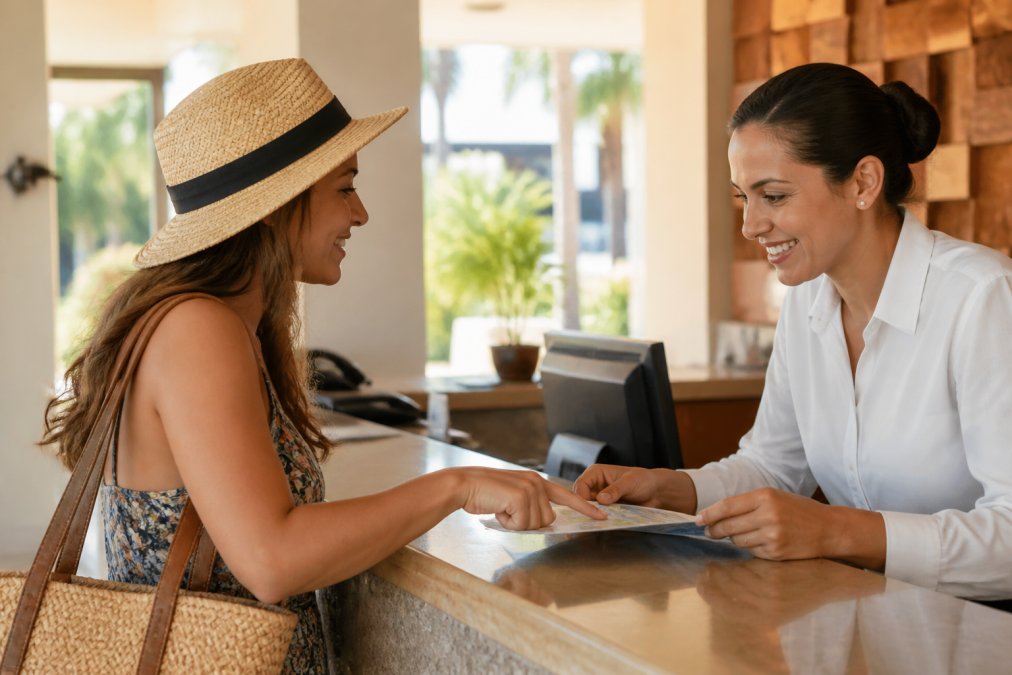
When checking into a hotel, practice these core phrases: "Tengo una reservación a nombre de..." (I have a reservation under the name of...), "¿Qué está incluido en la habitación?" (What's included in the room?), "¿A qué hora es el desayuno?" (What time is breakfast?), and "Hay un problema con..." (There's a problem with...).
For dining, know how to say: "Quisiera..." (I would like...), "¿Cuál es la especialidad de la casa?" (What's the house specialty?), "Soy vegetariano/a" (I'm vegetarian), "La cuenta, por favor" (The check, please), and "¿Aceptan tarjeta de crédito?" (Do you accept credit cards?).
Dining etiquette varies by region. In many Spanish-speaking countries, tipping isn't expected at casual restaurants but is appreciated at upscale establishments. Service is typically slower than in the United States, this is cultural, not poor service (peer-reviewed research). Meals are social events, so asking for the check immediately after eating can feel rushed.
Navigation and Transportation Vocabulary
Getting around requires specific vocabulary. Learn the difference between "taxi," "autobús" (bus), "metro" (subway), and "colectivo" (shared minibus, common in Latin America). Practice asking: "¿Dónde está la estación de autobús?" (Where's the bus station?), "¿Cuánto cuesta un boleto a...?" (How much is a ticket to...?), and "¿En qué parada me bajo para...?" (What stop do I get off for...?).
Research your specific destination's transportation system beforehand. Mexico City's metro operates differently from Buenos Aires's (peer-reviewed research). Small towns might rely on shared minibuses rather than formal bus systems.
Emergency Communication and Local Customs
Know how to say: "Necesito ayuda" (I need help), "¿Dónde está la policía/hospital?" (Where's the police/hospital?), "Tengo una alergia a..." (I'm allergic to...), and "Soy ciudadano/a estadounidense" (I'm a U.S. citizen). Memorize the emergency number for your destination.
Local customs matter beyond language. In many Spanish-speaking cultures, direct eye contact shows respect and honesty (peer-reviewed research). Greetings are warm and often include physical contact. Service providers respond more positively when they see you making an effort to respect local culture.
Step 3: Book Flights, Accommodation, and Activities
Booking as a bilingual traveler means deciding whether to use international booking platforms, contact providers directly, or work with a travel advisor. International platforms like Booking.com work in both languages and offer transparency, but direct communication with properties can be challenging if issues arise. Contacting providers directly sometimes yields better rates and personalized service, but requires confidence in bilingual communication.
A bilingual travel advisor bridges this gap. They negotiate directly with providers, understand regional nuances, and handle communication in both languages. Sand and Sun Travels specializes in this approach, working with bilingual families to secure accommodations and activities tailored to their specific needs.
When booking independently, always confirm key details in writing. Get confirmation emails in both English and Spanish if possible. Clarify cancellation policies, included amenities, and how to reach the property during your stay. Document everything, screenshots, confirmation numbers, contact information, in both languages.
How to Book Luxury Cruise Vacations as a Bilingual Traveler
Cruise vacations add complexity because you're coordinating with multiple service providers across different ports. Luxury cruise lines increasingly offer bilingual onboard services, but quality and availability vary by cruise line and destination. Research whether your cruise line offers Spanish-language dining options, bilingual excursion leaders, and Spanish-speaking guest services representatives.
A bilingual travel advisor can pre-arrange services across ports, coordinating with local tour operators to ensure your shore excursions include bilingual guides. They handle communication with the cruise line about your family's needs, dietary preferences, and activity preferences in both languages.
When booking a luxury cruise, specify your language preferences upfront. Request bilingual dining when available. Confirm that shore excursion guides speak both English and Spanish. Ask about special services for families with children or specific needs.
Creating Customized Travel Itineraries for Families
Family travel itineraries require balancing the interests and needs of multiple people. The best customized itineraries start with honest conversations about what each family member needs from the trip. What activities genuinely excite your kids? What's your budget? What's your tolerance for unstructured time versus scheduled activities?
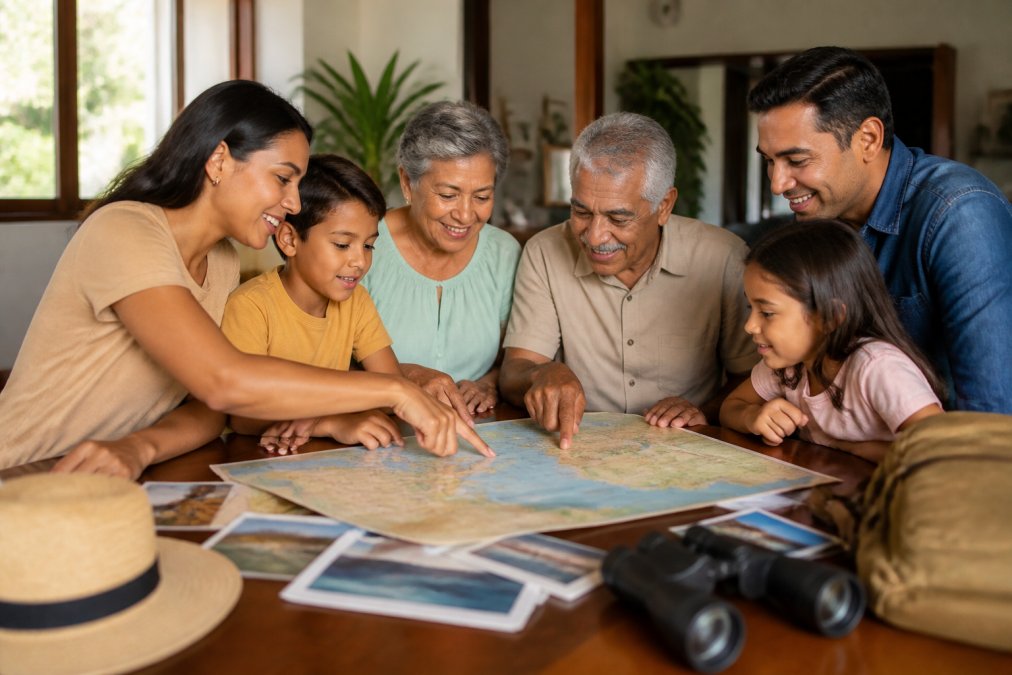
Once you've identified these needs, build an itinerary that addresses them explicitly. Instead of generic "family-friendly" activities, choose specific experiences that match your family's actual interests and language needs. If your kids are picky eaters, research restaurants known for simple, recognizable food. If your family speaks Spanish at home, book activities or tours with bilingual guides so everyone can participate fully.
Customized itineraries also account for practical logistics: travel time between locations, restaurant hours, buffer time between activities, and transportation needs. Sand and Sun Travels creates customized travel itineraries by understanding your family's specific needs, dietary preferences, activity interests, language preferences, and budget, building an itinerary that works for your actual family.
Benefits of Using a Travel Advisor for Bilingual Planning
The core value of a travel advisor isn't booking, you can book almost anything online. The value is expertise, relationships, and support before, during, and after your trip.
A travel advisor with bilingual expertise understands the specific challenges bilingual travelers face. They know which hotels have reliable bilingual staff and understand regional differences in service standards. Travel advisors also use relationships with hotels, tour operators, and service providers that translate to concrete benefits: VIP upgrades, resort credits, room upgrades, and exclusive activities.
The real benefit emerges when something goes wrong. A flight gets cancelled. A reservation gets lost. When you booked everything yourself online, you're on your own navigating language barriers. A travel advisor handles this, available to fix problems and negotiate with service providers.
For bilingual travelers specifically, a travel advisor fluent in both English and Spanish eliminates a critical friction point. Your advisor communicates with service providers in their language and translates needs accurately. Your family focuses on the experience while the advisor handles logistics.
Common Mistakes to Avoid When Planning Bilingual Travel
The biggest mistake bilingual travelers make is assuming their home Spanish will work everywhere. Invest time upfront researching regional dialects and common vocabulary variations for your destination.
Another common mistake is underestimating communication needs when traveling with family. Kids benefit enormously from understanding what's happening around them. Plan for this by teaching family members essential phrases together.
Many bilingual travelers also book everything independently to save money, then spend that savings on stress management during the trip. A bilingual travel advisor can offer significant value, especially when you factor in the value of their relationships and expertise.
A third common mistake is booking accommodations without confirming bilingual support is actually available. Confirm specific details in writing before booking: "Will a Spanish-speaking staff member be available 24/7?" "Do you have Spanish-language menus?"
Finally, many bilingual travelers underestimate the value of pre-trip planning for specific situations. Researching how to order food with dietary restrictions, understanding local transportation systems, and knowing how to communicate with emergency services prevents panic when situations arise.
Bilingual travel planning requires more upfront coordination than single-language travel, but the payoff is a trip where your entire family feels confident and included. Sand and Sun Travels specializes in working with bilingual families to research destinations, master essential communication skills, and book accommodations and activities that work for your specific needs. Our bilingual travel advisors handle coordination across multiple providers and languages, secure exclusive amenities and upgrades, and support you before, during, and after your trip. Request a quote from Sand and Sun Travels today and discover how personalized bilingual travel planning transforms your family vacation from stressful logistics into genuine connection with the destinations you visit.
| Planning Step | Key Focus | Communication Priority |
|---|---|---|
| Research destination | Regional dialects, local customs, transportation systems | Understand local vocabulary variations |
| Master phrases | Accommodation, dining, navigation, emergencies | Practice until confident and natural |
| Book accommodations | Confirm bilingual staff availability, amenities, cancellation policies | Get written confirmation in both languages |
| Create itinerary | Family needs, activity interests, practical logistics | Account for language preferences in activities |
| Arrange support | Travel advisor coordination, VIP relationships, problem-solving | Bilingual expertise handles provider communication |
Frequently Asked Questions
What are the benefits of using a bilingual travel advisor?
A bilingual travel advisor handles language barriers, cultural nuances, and logistical details you might miss booking alone. They secure VIP upgrades and exclusive amenities through industry partnerships, provide real human support if something goes wrong during your trip, and customize itineraries to your family's specific needs. Most importantly, they're available before, during, and after your trip to solve problems immediately rather than leaving you to navigate customer service calls in a foreign language.
How do I prepare for bilingual travel planning?
Start by researching your destination's regional dialects and local customs. Learn essential travel phrases for accommodation, dining, transportation, and emergencies. Understand visa requirements, currency, and local emergency numbers. If traveling with family members who speak primarily Spanish, brief them on key English phrases for airports and tourist areas. Gather information about your destination's cultural etiquette to avoid misunderstandings. A travel advisor can streamline this research and ensure nothing is overlooked.
What should I know about regional dialect variations when traveling?
Spanish varies significantly by region. Mexican Spanish differs from Argentine, Colombian, or Spanish European Spanish in pronunciation, vocabulary, and slang. For example, the word for 'car' is 'coche' in Spain but 'carro' in Colombia. Understanding these variations helps you communicate more naturally with locals and service providers. Learning a few regional phrases specific to your destination shows respect for local culture and improves your travel experience. A travel advisor familiar with your specific destination can brief you on these nuances.
Can a travel advisor help with digital nomad or remote work logistics?
Travel advisors experienced with bilingual planning understand the unique needs of remote workers and digital nomads. They can book accommodations with reliable WiFi, identify time zones that work with your schedule, and research destinations with strong digital infrastructure. They also understand visa requirements for extended stays and can help coordinate with local service providers in Spanish if you need technical support or local services during your trip.