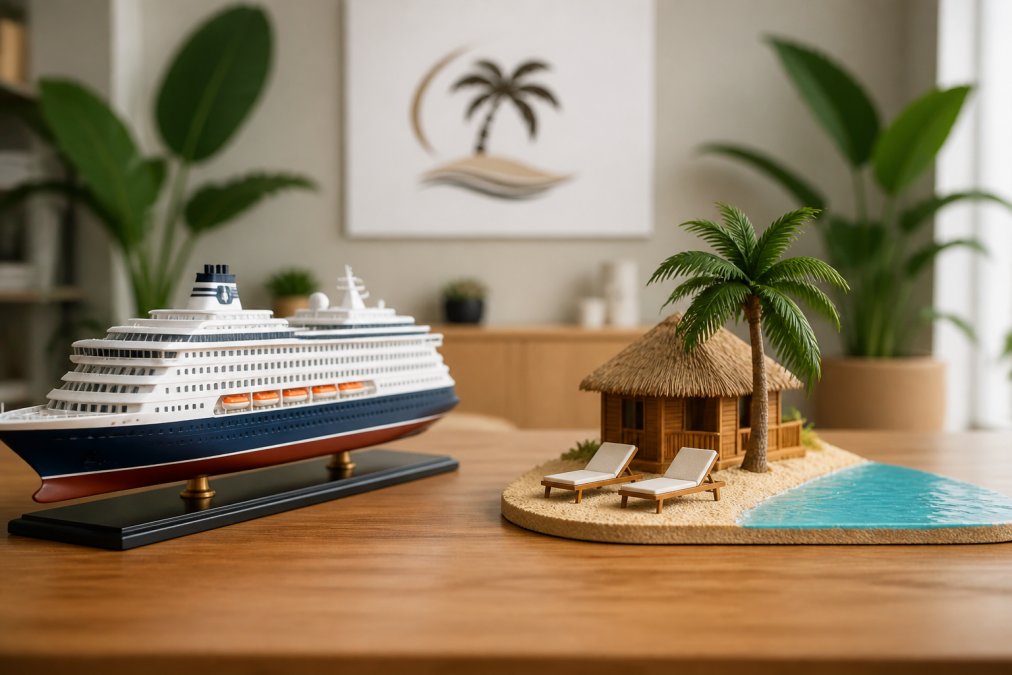
 comparison
Cruises vs All-Inclusive Resorts for Family Vacations 2026
Table of Contents
- Cruises vs All-Inclusive Resorts: Which Fits Your Family
- All-Inclusive Resort vs Cruise Cost Breakdown
- Best Family Cruise Lines 2026
- Flexibility, Schedule, and Daily Life Onboard
- Multi-Generational Travel Planning Considerations
- Dining, Activities, and Entertainment Comparison
- Which Option Suits Your Family Best
- Frequently Asked Questions
Last Updated: September 26, 2026
Cruises vs All-Inclusive Resorts: Which Fits Your Family
When comparing cruises vs all-inclusive resorts for your family vacation, the core tension comes down to this: do you want constant change and structured entertainment, or flexibility and a home base? Both deliver value, but they serve fundamentally different family needs.
At Sand and Sun Travels, we've helped many families navigate this decision. The choice isn't about which option is "better", it's about which matches your family's personality, budget, and what you actually want from vacation time. Some families thrive on the energy of a cruise ship with activities scheduled every hour. Others need the freedom to wake up, decide their day, and not worry about missing a port.
This guide breaks down the real differences: what's actually included in each price, which family types benefit most from each option, and the hidden costs that surprise people mid-trip. By the end, you'll know exactly which direction makes sense for your family.
All-Inclusive Resort vs Cruise Cost Breakdown
The price comparison between cruises and all-inclusive resorts isn't straightforward because "included" means different things. Both bundle lodging, meals, and entertainment, but the scope varies significantly.
What's Included in Cruise Pricing
A cruise base fare covers your stateroom, all meals in the main dining room and buffet, onboard entertainment, and access to most activities. What you're paying for is transportation between destinations plus the floating hotel.
What cruises typically don't include: specialty restaurants (surcharge per visit), alcoholic beverages beyond basic beer and wine, gratuities for crew members, shore excursions at ports of call, travel insurance, and onboard purchases like spa services or photos. For a family of four on a week-long cruise, these extras add up quickly,
What's Included in Resort Pricing
All-inclusive resorts bundle differently. Your rate typically covers the stateroom, all meals at multiple restaurants, snacks, non-alcoholic beverages, and most on-site activities and entertainment. The key word is "on-site", you're not paying per activity; you're paying one flat rate for unlimited access to what the resort offers.
What all-inclusive resorts don't include: off-property excursions, premium spa treatments, specialty dining at some resorts, travel to the resort, and travel insurance.
The pricing structure is simpler: you know your total cost upfront. There's less temptation to spend extra because entertainment and dining are already paid for.
Hidden Costs and Gratuities
This is where families get surprised. Cruises require gratuities, a service charge added automatically to your onboard account.
All-inclusive resorts typically include gratuities in the all-inclusive rate, though some resorts still suggest additional tips for exceptional service. The difference: with a resort, you're not getting surprise charges added daily.
Shore excursions on cruises are a major expense category families overlook.
All-inclusive resorts avoid this dynamic. Activities are included. If you want an off-property excursion, you book it separately, but it's optional, not the default expectation.
Travel insurance is often skipped by families but becomes critical for both cruise and resort bookings. It's not "hidden," but it's frequently forgotten in initial cost calculations.
Best Family Cruise Lines 2026
Not all cruise lines deliver the same family experience. Some specialize in high-energy entertainment and packed itineraries. Others focus on relaxation with fewer daily activities.
Royal Caribbean: Multi-Destination Exploration
Their ships feature water parks, rock climbing walls, Broadway-style shows, and multiple dining venues. The itinerary changes daily, you wake up in a new port, explore for a few hours, and return to the ship for dinner.
This appeals to families who get restless staying in one place. Your kids experience three, four, or even five different destinations in a single week. The logistics of packing and unpacking happen once. You don't rent a car or navigate unfamiliar roads at each stop.
The trade-off: the ship itself becomes the main attraction. If your family wants to deeply explore one destination, a cruise isn't the right fit. You get a taste of multiple places but depth in none.
Youth Programs and Entertainment
Family cruise lines invest heavily in kids' clubs and teen programming because parents need breaks.
The quality varies by ship and itinerary. Newer ships have more elaborate facilities. Longer cruises (7+ days) offer more varied programming than short cruises.
What families often miss: these programs are optional. Your kids don't have to attend. Some families book cruises hoping the ship will entertain their kids for a week, and then feel guilty leaving them in the club. That's a mindset problem, not a cruise problem. The programs exist so families can split time: kids do structured activities, parents relax or explore ports, then everyone reunites for dinner and evening shows.
Flexibility, Schedule, and Daily Life Onboard
This is where cruises and resorts diverge most sharply. Cruises operate on a structured schedule. Breakfast service ends at a specific time. The ship departs from port at a set hour. Evening entertainment starts when the program says it starts.
Resorts operate on your schedule. Sleep until 10 a.m., eat lunch at 2 p.m., skip dinner and grab snacks instead, no one cares. You set your own itinerary each day.
For families with young children or rigid routines, this matters enormously. If your toddler needs a nap at 2 p.m. and the ship is at sea with no option to return to your stateroom quietly, that's a problem. Resorts let you nap when you need to.
Cruises work better for families comfortable with spontaneity and structured days. The schedule removes decision fatigue, activities are planned, entertainment is guaranteed, and you don't have to figure out what to do each morning.
For families with picky eaters or specific dietary needs, resorts offer more flexibility. You can eat at different restaurants, skip meals, or grab snacks on your own timeline. Cruise ships have main dining rooms and buffets, but specialty dietary requests require advance notice and may feel limiting during peak meal times.
Multi-Generational Travel Planning Considerations
Traveling with grandparents, parents, and children in one group introduces complexity both options handle differently.

Cruises work well for multi-generational groups because everyone stays connected. You share a corridor of cabins, meet for meals, and reunite for evening shows. Grandparents can watch grandchildren during the day while parents relax. The ship provides built-in activities for every age group.
The challenge: staterooms on cruise ships are small. If you're booking multiple cabins for a large extended family, costs escalate quickly. You're paying per cabin, not per person, so a family of twelve might need four or five staterooms.
Resorts offer more spacious accommodations. Many all-inclusive properties have large suites or villa-style rooms that fit extended families in a single unit. You have more privacy and space for multigenerational groups to function independently within the same property.
Accessibility and Special Needs
This is a significant gap most guides overlook. Cruise ships have accessibility features, but they're limited. Elevators, accessible staterooms, and adapted dining areas exist on modern ships. However, the ship's size and layout create navigation challenges for guests with mobility issues.
All-inclusive resorts vary widely in accessibility. Newer properties often have better ADA compliance, but older resorts may have stairs, narrow hallways, and limited adapted facilities. You need to research specific resorts carefully.
Sand and Sun Travels can customize travel plans for families with specific accessibility needs. Our advisors can identify which cruise lines and resorts can accommodate your family's requirements.
Dining Flexibility for Picky Eaters
Picky eaters present a real challenge on both options, but cruises feel more restrictive. Cruise ship dining operates on set menus. If your child eats only chicken fingers and pasta, the main dining room has limited options. Buffets offer more variety, but the selection is still fixed.
All-inclusive resorts typically have multiple restaurants with different cuisines. If your child refuses the Mexican buffet, there's often a casual restaurant with basic options. You have more control over finding something your child will actually eat.
For families with severe dietary restrictions (allergies, vegan, kosher), both options require advance notice. Cruise lines will accommodate, but communication must happen before boarding.
Dining, Activities, and Entertainment Comparison
This comparison reveals why families choose differently based on their vacation philosophy.
| Aspect | Cruises | All-Inclusive Resorts |
|---|---|---|
| Destinations Visited | Multiple (4-7 per week) | Single location |
| Daily Schedule | Structured, planned | Flexible, self-directed |
| Meals | Set dining times, assigned seating | All-day access, multiple venues |
| Activities | Scheduled entertainment | Optional, on-site activities |
| Gratuities | Automatic daily charge | Usually included |
| Specialty Dining | Additional cost | Often included |
| Shore Excursions | Additional cost per activity | Off-property trips extra |
| Best For | Variety seekers, families wanting structure | Relaxation-focused, flexible families |
Which Option Suits Your Family Best
The decision hinges on what your family actually values in vacation time.
Frequently Asked Questions
Is it cheaper to book a cruise or an all-inclusive resort for a family of five?
Cost depends on destination, travel dates, and what's included. Cruises bundle lodging, meals, and entertainment in the base price. All-inclusive resorts also bundle lodging, meals, and entertainment. However, cruises often add gratuities, specialty dining, and shore excursions, while resorts typically include most on-site activities. Request a personalized quote from Sand and Sun Travels to compare actual costs for your specific family size and travel dates.
What hidden costs should families expect when booking a 2026 vacation?
Cruises typically include gratuities, specialty restaurant charges, alcoholic beverages, shore excursion fees, and onboard shopping. Resorts may charge for premium dining, spa services, water sports rentals, and off-property activities. Travel insurance, transportation to the port or resort, and pre-trip meals also add up. A travel advisor can help identify all costs upfront so you budget accurately.
Are all-inclusive resorts better for multi-generational family travel?
All-inclusive resorts offer advantages for multi-generational groups: a single home base reduces travel fatigue for older adults, flat-rate pricing simplifies budgeting for large families, and on-site amenities let different age groups pursue separate activities. Cruises require more stamina for embarkation and disembarkation but offer structured programming. The best choice depends on your group's mobility, activity preferences, and desire for destination variety versus relaxation.
Which vacation type offers more flexibility for families with teenagers?
All-inclusive resorts generally offer more flexibility. Teenagers can explore the resort independently, choose their own meal times and activities, and set their own pace. Cruises follow a structured itinerary with scheduled dining times and port days, though onboard activities are abundant. Resorts allow teens to sleep in or skip activities without disrupting the family's plans, while cruises require coordinating around ship schedules.