 how-to
How Do You Customize Itineraries for Picky Eaters?
Last Updated: November 4, 2026
Quick Summary
Customizing itineraries for picky eaters starts with a written food profile listing safe foods, texture limits, and non-negotiables, then builds each day around food rather than squeezing meals between sights. We anchor breakfast near the hotel, use lunch as the adventure meal, and keep dinner safe and familiar.
- Build a four-week runway before departure covering visual exposure, narrative rehearsal, controlled novelty, and pack rehearsal.
- Keep a daily rhythm of one new food and two familiar ones to protect nutritional balance.
- TSA's 3-1-1 rule limits liquids to 3.4-ounce containers in a single quart bag.
- Print three laminated translation cards and keep one with your child's medication.
- Hand the translation card to the server before ordering, not after the food arrives.
Table of Contents
- Start With a Food Profile Before You Book Anything
- Meal Planning for Picky Eaters on Vacation: Build the Day Around Food, Not the Reverse
- Picky Eater Travel Snacks That Survive Airports, Road Trips, and Long Days
- Restaurant Planning for Family Trips: Research Menus Before You Land
- Finding Familiar Food While Traveling Without Missing the Local Scene
- Handling Dietary Restrictions, Allergies, and Language Barriers
- Request a Custom Itinerary Built Around Your Picky Eater
- Frequently Asked Questions
Start With a Food Profile Before You Book Anything
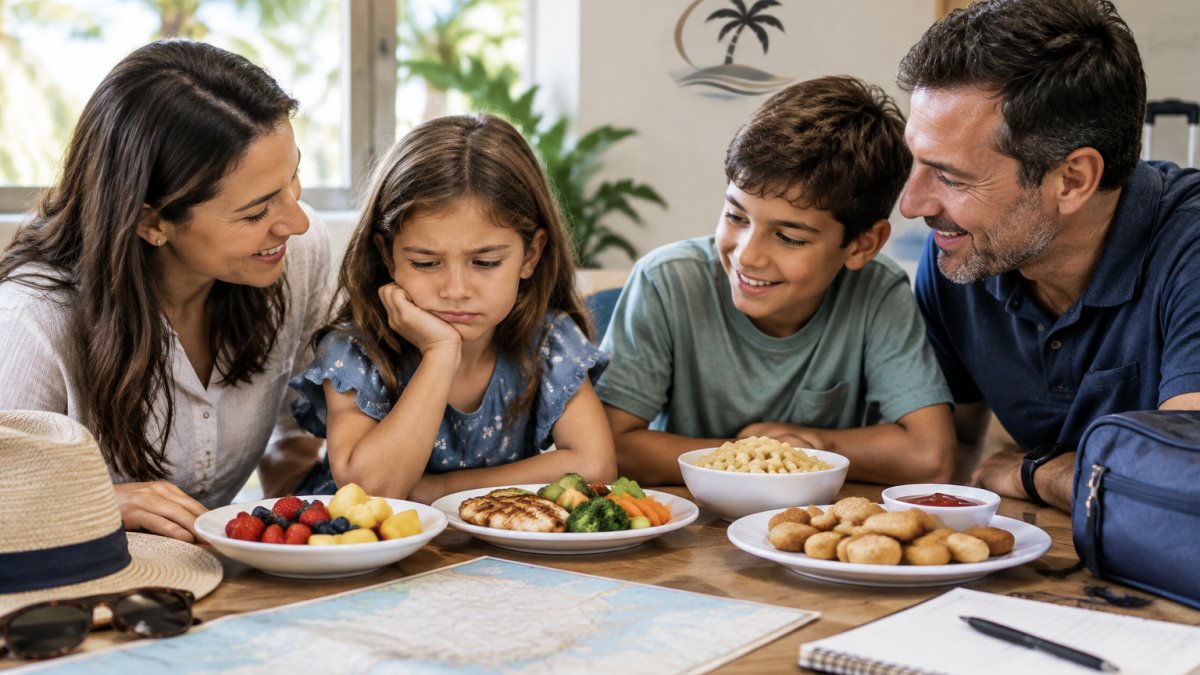
Customizing itineraries for picky eaters starts long before you open a booking site. It starts at your own kitchen table. A food profile is a written record of what your child actually eats, and it is one of the most useful tools for planning family trips.
Most parents skip this step, booking first and panicking about meals later. That order is backwards and costs them.
Map Safe Foods, Texture Limits, and Non-Negotiables
Sit down and write three lists. Keep them short and honest.
- Safe foods: the ten to fifteen things your child eats without a fight
- Texture limits: crunchy versus mushy, wet versus dry, mixed versus separate
- Non-negotiables: the hard lines, like no sauce touching the plate
Be specific. "Likes chicken" is useless. "Eats grilled chicken strips, plain, no seasoning, cut into strips" is a plan.
A common mistake is listing foods your child should eat. Don't. This list is about reality, not goals.
Add a fourth column most parents miss: the sensory profile behind each refusal.
Prepare Your Child Mentally for New Food Environments
Food anxiety on vacation usually comes from surprise. Remove the surprise and the anxiety drops.
Build a four-week runway before departure:
- Week one, visual exposure. Show photos of the hotel restaurant, the breakfast buffet, and two or three menus. No pressure to eat, just familiarity.
- Week two, narrative rehearsal. Walk through the trip out loud: "We'll sit at a table. A server will bring a plate. If you don't like it, you can say 'no thank you' and we'll get something else." Scripting the exit ramp removes the trapped feeling that drives most mealtime meltdowns.
- Week three, controlled novelty at home. Serve one new food alongside two safe foods, once a week. The rule is no pressure to eat it, touching, smelling, or licking counts as success. This is the same "one new, two familiar" ratio you'll use on the trip, so the pattern is already familiar.
- Week four, pack rehearsal. Let your child choose and pack their own comfort food items. Ownership reduces anxiety on arrival day, when everything else is unfamiliar.
Watch out: don't use food as a reward or a punishment during rehearsal.
Psychologically preparing a child for new food environments is an easily overlooked part of trip planning. It costs little beyond a few weeks of low-stakes practice.
A food profile rests on three short, honest lists plus one column most parents miss.
| List | What to record | Example or note |
|---|---|---|
| Safe foods | Ten to fifteen things eaten without a fight | Be specific, not general |
| Texture limits | Crunchy versus mushy, wet versus dry, mixed versus separate | Keep it short and honest |
| Non-negotiables | The hard lines | No sauce touching the plate |
| Sensory profile | Why each food is refused | Smell, temperature, color, or texture |
Meal Planning for Picky Eaters on Vacation: Build the Day Around Food, Not the Reverse
The standard vacation day is built around sights, then food gets squeezed in wherever it fits. Flip that.
Here is how we structure it:
- Breakfast near the hotel: familiar, low-risk, no travel required
- Lunch as the adventure meal: this is when you try local cuisine
- Dinner as the safe meal: back to known foods, especially after a long day
Why lunch for adventure? Kids have more patience earlier in the day.
Keep a simple daily rhythm: one new food, two familiar ones. That ratio protects nutritional balance without turning every meal into a battle.
For broader help with pacing the whole trip, these tips for planning a stress-free family vacation pair well with a food-first schedule.
Picky Eater Travel Snacks That Survive Airports, Road Trips, and Long Days
Start with the security rules. The TSA's 3-1-1 liquids rule limits containers to 3.4 ounces in a single quart bag.
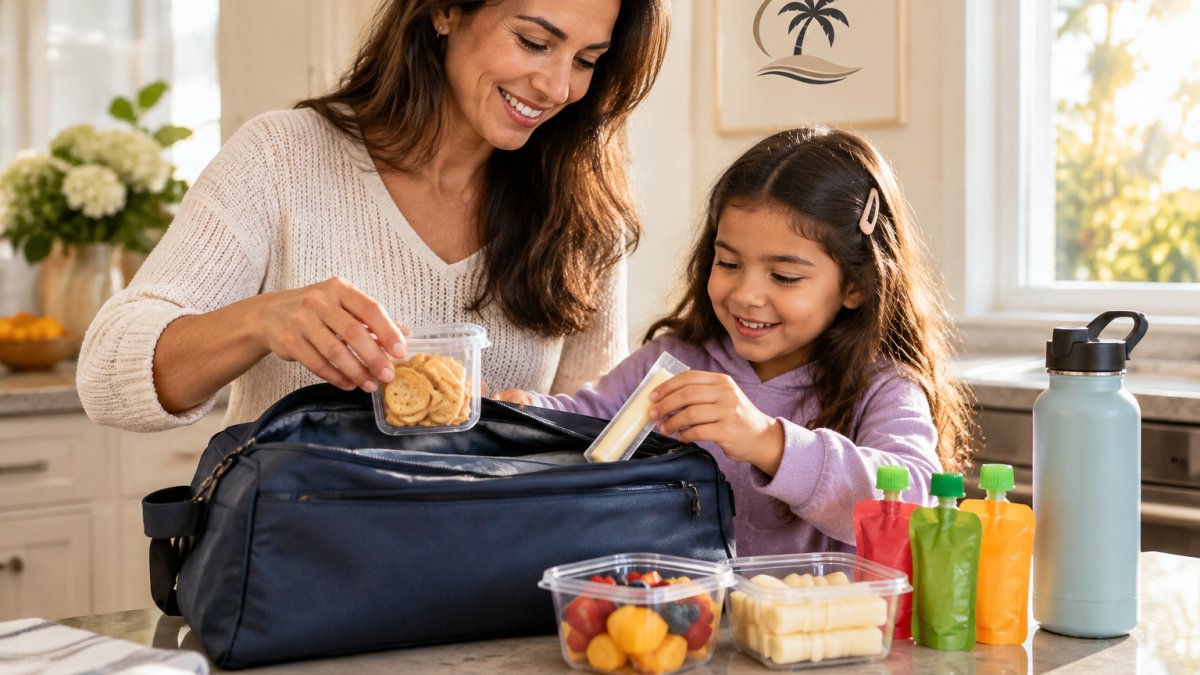
Build your snack kit around these categories:
- Shelf-stable protein: nut butter packets, shelf-stable cheese, jerky
- Familiar carbs: plain crackers, dry cereal, plain pasta in a container
- Fruit that travels: apples, bananas, dried fruit
For road trips, pack a small cooler with ice packs so sandwiches and cut fruit stay safe for hours.
Watch out: don't rely on airport food courts. A delayed flight at a small terminal can leave you with nothing your child will eat.
Restaurant Planning for Family Trips: Research Menus Before You Land
Restaurant planning for family trips is 80% research and 20% eating. Pull up menus online before you book the trip, not after you arrive hungry.
Look for four things on every menu:
- A plain protein your child recognizes
- A separate-sides option, so nothing touches
- A kids' menu with real food, not just fried items
- A kitchen that takes modification requests well
Call ahead when you can. Ask one question: "Can you serve grilled chicken plain, with no sauce?" The answer tells you more than any review.
Kids' Menus vs. Local Cuisine: When to Push and When to Pass
Kids' menus are safe, but they're also a trap. They teach your child that vacation food is the same as home food.
Push toward local cuisine when:
- The dish has a familiar base, like rice, bread, or noodles
- Your child is rested and in a good mood
- You have a backup snack in the bag
Pass when your child is exhausted, overstimulated, or already hungry. Sensory sensitivities spike when kids are tired, and a forced bite then sets food exploration back weeks.
The USDA's dietary guidelines are a useful reference for balancing nutrition across a trip, but they don't account for a child who eats five foods. Use them as a rough guide, not a rulebook.
Finding Familiar Food While Traveling Without Missing the Local Scene
Finding familiar food while traveling doesn't mean chain restaurants for two weeks. It means knowing where the safe options are so the rest of the trip can be adventurous.
Three reliable sources:
- Local grocery stores: the fastest route to familiar brands and fresh basics
- Hotel breakfast buffets: usually plain, predictable, and kid-approved
- Expat neighborhoods: often carry imported foods your child already knows
Then balance it. Try one local market, one local restaurant, and one familiar meal each day. Cultural immersion and a picky eater can coexist; they just need a schedule.
Budget-Friendly Grocery Shopping in Foreign Destinations
Grocery shopping abroad saves money and stress at once. A simple breakfast from a local store often costs a fraction of a hotel meal.
- Shop where locals shop, not near the main tourist strip
- Buy fruit, bread, and cheese for breakfast and picnic lunches
- Check unit prices; package sizes vary by country
One insider tip: photograph the shelf label of anything your child loves. If it disappears, you can show the photo to a store clerk later.
Handling Dietary Restrictions, Allergies, and Language Barriers
Dietary restrictions and allergies raise the stakes. A picky eater who refuses food is frustrating; a child with a nut allergy at a restaurant where nobody speaks English is dangerous.
Start with a written list of every restriction, translated into the local language. Then build a travel routine around it:
- Confirm ingredients with the server every time
- Carry your child's medication in your day bag, not the checked luggage
- Avoid buffets where cross-contact is likely
If language is the bigger barrier for your family, this guide to bilingual travel planning for families covers how to set up communication before you arrive. For group trips with mixed language needs, organizing group travel with language barriers walks through the logistics.
Translation Cards That Actually Work at the Table
A translation card is a small printed card stating your child's dietary needs in the local language. It works because it removes guesswork from a fast, noisy conversation, the server reads it instead of parsing your accent over a crowded dining room.
Build yours with these fields, in this order:
- The restriction: "My child cannot eat peanuts or tree nuts."
- The severity: "This is a severe allergy. It can be life-threatening."
- The cross-contact warning: "Please use clean utensils, clean surfaces, and clean oil."
Print three copies. Laminate them. Keep one in your wallet, one in your day bag, and one with your child's medication.
A few practical refinements most guides skip:
- Use the local script, not just the Latin transliteration. A server in a busy kitchen reads characters faster than phonetics.
- Add a photo of the allergen if you're traveling somewhere the ingredient name varies by region. A picture of a peanut crosses more language barriers than the word.
- Keep a digital copy on your phone's lock screen. If the laminated card is lost, the backup is already open.
The Verification Workflow: How to Confirm a Dish Is Safe
A translation card is only half the system. The other half is a repeatable check you run at every meal, so safety doesn't depend on how tired or distracted you are.
- Hand the card before ordering, not after the food arrives. Once a dish is on the table, the kitchen has already committed.
- Ask the server to confirm with the kitchen, not from memory. "Could you check with the chef?" is a normal request in most restaurants and a red flag if it's refused.
- Repeat the restriction back when the plate arrives: "This is the nut-free version, correct?" A second confirmation catches the most common failure, a dish swapped at the pass.
- Carry a backup meal your child can eat if the confirmation doesn't come back clean. A shelf-stable safe food in the day bag turns a failed dinner into a minor inconvenience instead of a hunger-driven meltdown.
Watch out: don't assume a kids' menu is safer. Fried items, shared fryers, and pre-made kids' plates are among the most common sources of cross-contact in family restaurants, and a kids' menu often gets less kitchen attention than an adult entrée.
For families managing both picky eating and a diagnosed allergy, build the two plans together, not separately. The safe-food list from your food profile becomes the backbone of the translation card, and the card becomes the script your child rehearses at home. One document, three uses: planning, preparation, and protection at the table.
Request a Custom Itinerary Built Around Your Picky Eater
Here is the honest truth: you can do all of this yourself, and many parents do.
Our advisors build fully customized itineraries, and because our team is fluent in both English and Spanish, we can help with communication across language barriers.
You also get real human support before, during, and after your trip.
Want to see how the process works? Read what custom vacation planning actually looks like, or compare it against how custom planning beats a package trip.
Your child's food needs shouldn't decide whether your family travels. They should decide how you travel.
Frequently Asked Questions
How do you plan a trip with a picky eater?
Start with a food profile: list the foods your child reliably eats, textures they reject, and any allergies. Then build the itinerary around confirmed options, researching restaurant menus and grocery stores near each stop before booking. Pack backup snacks for travel days and keep one familiar meal per day as an anchor. Customizing itineraries for picky eaters works best when food logistics are planned first and activities fit around them, not the other way around.
What snacks should you pack for a picky eater on vacation?
Pack shelf-stable foods your child already accepts: crackers, cereal bars, fruit pouches, plain pasta in a container, and individually wrapped cheese or nut packs if allergies allow. For flights, follow TSA rules on liquids and gels, which generally allow small containers of 3.4 ounces or less in a quart-sized bag. For road trips, bring a small cooler with ice packs. Picky eater travel snacks should be familiar, low-mess, and enough to cover delays of several hours.
How can you find familiar foods when traveling?
Search grocery chains and international food aisles near your hotel before you arrive, and ask your accommodation whether a refrigerator or microwave is available. Many destinations stock global brands in larger supermarkets, and hotel breakfast buffets often have plain bread, fruit, and eggs. Finding familiar food while traveling is easier when you scout two or three stores in advance and note which carry the specific brands or basics your child accepts.
Should you encourage a picky eater to try new foods while traveling?
Offer, don't pressure. Travel exposes kids to food variety naturally, and research on feeding practices generally supports repeated, low-pressure exposure over forcing bites. Try one new food alongside a safe one, keep portions small, and let your child decide whether to taste. If a meal goes badly, fall back to a familiar option without drama. The goal is adventurous eating over time, not a perfect record on any single trip.