 how-to
How to Choose an Adventure Travel Company
Table of Contents
- Verify Certifications and Accreditation
- Is Hiring a Travel Advisor Good for Adventure Trips
- Assess Risk Management and Safety Protocols
- Questions to Ask Adventure Tour Operators
- Review Pricing Transparency and Hidden Costs
- Evaluate Post-Booking Support and Crisis Management
- Check Sustainability and Cultural Impact Practices
- Frequently Asked Questions
Last Updated: September 18, 2026
Verify Certifications and Accreditation
The first step in choosing an adventure travel company is confirming they hold legitimate certifications and accreditation. Because the adventure travel industry has minimal regulation, a certified operator demonstrates they've met specific standards for safety, training, and customer service.
Look for these key credentials:
- Adventure Travel Association (ATA) membership, demonstrates commitment to responsible tourism
- Tour operator licenses, required in most states; verify with your state's attorney general
- Guide certifications, ACCT (American Canoe Club of Tourism), IFMGA (International Federation of Mountain Guides), or similar body-specific credentials
- Insurance coverage, liability insurance for accidents or emergencies
- Safety accreditations, ISO 21601 for adventure tourism safety management
Verify Financial Stability and Operational Viability
How to check financial stability:
- Business registration and licensing, Confirm the company is registered with your state's Secretary of State office and holds an active business license by searching the state database directly.
- Bonding status, Many states require tour operators to carry surety bonds (typically $10,000-$50,000) that protect consumer deposits if the company fails. Ask: "Are you bonded? What is your bond number?" Verify the bond is active through your state's insurance commissioner.
- Years in operation, Ask: "How long have you been operating this exact trip?" A company running the same trip for 10+ years is lower risk than one launching new itineraries every season.
- Bankruptcy and legal history, Search the Federal Bankruptcy Court database (pacer.uscourts.gov) for the company name. Check your state's court records for unresolved lawsuits or judgments against the operator.
- Bank account and payment processing, Reputable operators use established payment processors and separate client trust accounts. If they request wire transfers to personal accounts or cryptocurrency, walk away.
- Insurance claims history, Contact your state's insurance commissioner to ask if the company has faced complaints related to trip cancellations or refunds.
- Deposit protection, Ask whether deposits are held in a trust account separate from operating funds. If the company goes under, trust account funds are protected; operating account funds are not.
Red flags for financial instability:
- No clear cancellation or refund policy in writing
- Pressure to pay the full balance months in advance
- Unwillingness to provide proof of bonding or insurance
- Frequent price changes or sudden "limited-time" discounts
- No verifiable business address or phone number
- Negative reviews mentioning refund disputes
A financially stable operator welcomes these questions because transparency is a sign of confidence. Evasiveness or defensiveness is a major warning sign.
Is Hiring a Travel Advisor Good for Adventure Trips
A travel advisor is worth it if you want customized itineraries, need logistics support, prefer a real person to call if something goes wrong, or want access to exclusive deals unavailable online. A travel advisor is less necessary if you have extensive adventure travel experience and can manage communications yourself.
Assess Risk Management and Safety Protocols
Safety protocols separate professional adventure travel companies from amateur operations. Before booking, you need to understand how they manage risk.
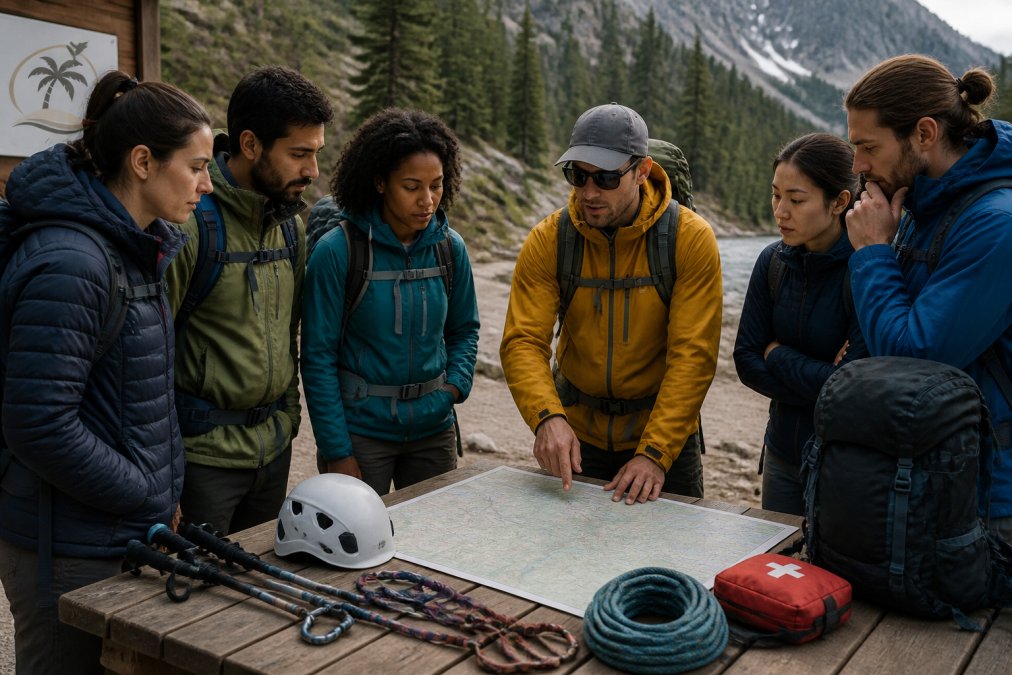
Ask about their risk management plan:
- Pre-trip medical screening, Do they ask about fitness level and health conditions?
- Emergency evacuation procedures, What's their protocol if someone gets injured?
- Weather contingency plans, How do they handle unexpected storms?
- Equipment inspection schedules, How often are ropes and climbing gear inspected?
- Guide-to-group ratios, What's the maximum number of clients per guide? (Typically 1 guide per 4-6 clients for technical activities)
- Communication systems, Do guides carry satellite phones or radios in remote areas?
Questions to Ask Adventure Tour Operators
Before committing to any adventure travel company, ask these specific questions. The quality of their answers reveals how professional they are.
About the itinerary:
- "How flexible is the itinerary if weather requires changes?"
- "What's included in the package price, and what costs extra?"
- "What's the physical difficulty rating?"
About the guides:
- "What certifications do your guides hold?"
- "What's your guide-to-client ratio?"
- "Do guides receive wilderness first aid training?"
About logistics:
- "What happens if I get injured during the trip?"
- "What's your cancellation policy?"
- "Do you offer single traveler accommodations?"
About the company:
- "How long have you been operating this specific trip?"
- "Can you provide references from recent travelers?"
- "What's your refund policy if the trip is cancelled?"
Review Pricing Transparency and Hidden Costs
Pricing transparency separates trustworthy adventure travel companies from those that hide fees until the final invoice. A legitimate company clearly lists base trip cost, flights, accommodations, meals, activities, gratuities, travel insurance, single supplement fees, and payment schedules. Many adventure travel companies quote a low base price, then add 30-40% in hidden fees. Ask for a detailed, itemized breakdown before booking.
Solo Traveler Pricing and Safety Premiums
Solo traveler pricing considerations:
- Single supplement fees, Most adventure travel companies charge 25-50% of the base trip cost for a private room. Ask: "What is your single supplement fee, and is it waived if I agree to be matched with a roommate?"
- Group size and solo traveler ratios, Ask what percentage of the group is typically solo travelers. Groups with 30-40% solo travelers offer better social dynamics.
- Shared vs. private accommodations, Clarify whether "shared accommodations" means a double room or dormitory-style setup.
- Meal arrangements for solo travelers, Ask whether meals are communal or self-arranged.
Solo traveler safety considerations:
- Guide awareness of solo status, Confirm guides are briefed on solo travelers and will check in during activities.
- Emergency contact protocols, Ask: "If I'm injured, who will notify my emergency contact and how quickly will you initiate evacuation?"
- Solo traveler orientation, Some operators offer pre-trip calls for solo travelers. This indicates they understand solo travel needs.
- Buddy system, Ask whether the company pairs solo travelers with guides or other participants during technical activities.
- Accommodation location, Ask: "Are solo travelers housed near the main group? Is there 24/7 staff presence?"
Questions specific to solo travelers:
- "What percentage of your typical group is solo travelers?"
- "Do you offer free roommate matching?"
- "Are guides trained to monitor solo travelers during activities?"
- "What is your protocol if a solo traveler becomes injured?"
- "Are meals communal or self-arranged?"
A company that welcomes solo travelers and has clear pricing and safety protocols for them is more likely to deliver a positive experience. Vague answers or reluctance to discuss solo-specific arrangements suggests the company views solo travelers as an afterthought rather than a core part of their business.
Evaluate Post-Booking Support and Crisis Management
What happens after you book is as important as what you book. Post-booking support reveals whether an adventure travel company genuinely cares about your experience.
Before booking, ask:
- "What's your communication process between now and the trip?" (Do they send regular updates? Can you reach them with questions?)
- "Who do I contact if something goes wrong before the trip?"
- "Do you have 24/7 support during the trip itself?"
- "What happens if I need to cancel after booking?"
- "If the trip is cancelled due to weather or safety concerns, what are my options?"
The best adventure travel companies:
- Assign you a dedicated contact person who knows your itinerary
- Send regular pre-trip communications with packing lists, fitness preparation, and logistics details
- Provide emergency contact information for 24/7 support during your trip
- Handle rebooking or refunds quickly if circumstances force cancellation
- Follow up after the trip to ensure you're satisfied
Check Sustainability and Cultural Impact Practices
Adventure travel impacts the destinations and communities where it operates. Responsible companies minimize harm and contribute positively to local economies.
Ask about their sustainability practices:
- Local hiring, Do they employ local guides and staff?
- Community benefits, What percentage of trip costs goes directly to local communities?
- Environmental impact, Do they follow Leave No Trace principles? How do they manage waste?
- Cultural sensitivity, Have guides received training on respecting local customs and traditions?
- Wildlife protection, Do they avoid activities that exploit animals or disrupt ecosystems?
Responsible adventure travel companies:
- Partner with local conservation organizations
- Limit group sizes to minimize environmental damage
- Require guides to complete cultural sensitivity training
- Provide transparent reporting on community contributions
- Avoid activities that harm wildlife or fragile ecosystems
Frequently Asked Questions
How do I verify the safety record of an adventure travel company?
Request specific safety certifications, incident reports, and insurance coverage details. Ask how many years they've operated and request references from recent travelers. Check whether they comply with industry safety standards and have emergency evacuation protocols. Verify guide qualifications and ask about their training frequency. A reputable adventure travel company will provide documentation without hesitation and explain their risk management processes clearly.
What questions should I ask before booking an adventure tour?
Ask about physical difficulty ratings, group size limits, and daily itinerary pacing. Inquire about what's included versus excluded, cancellation policies, and single supplement fees. Request details on guide certifications, emergency procedures, and post-booking support availability. Ask whether the company customizes itineraries for specific needs and how they handle last-minute changes. Understanding these fundamentals prevents surprises and ensures the tour matches your expectations and abilities.
Is hiring a travel advisor good for adventure trips?
A travel advisor adds significant value for adventure trips by handling complex logistics, securing exclusive amenities, and providing real human support before, during, and after your journey. Advisors understand group dynamics, can customize itineraries around specific physical requirements or preferences, and offer crisis management if emergencies arise. Rather than navigating multiple vendors alone, advisors leverage industry relationships to access better pricing and exclusive experiences while handling all coordination details.
What red flags should I watch for when choosing a tour operator?
Avoid operators who lack clear certifications, hide pricing details, or refuse to answer safety questions. Red flags include vague itineraries, no cancellation policy, pressure to book quickly, and unavailable customer support. Be wary of operators who cannot provide references or have consistently poor customer testimonials. If they won't explain their risk management approach or guide qualifications, that's a significant concern. Transparency and accessibility are hallmarks of trustworthy adventure travel companies.