 how-to
How Travel Agents Handle Flight Delays
Table of Contents
- Why Flight Delays Happen and What Travel Agents Know First
- Step 1: Real-Time Monitoring and Immediate Notification
- Step 2: Accessing GDS Systems to Rebook Your Flight
- Step 3: Managing Your Itinerary and Connecting Flights
- Understanding Airline Passenger Rights for Delays
- Travel Insurance for Flight Delays: What Agents Coordinate
- What Happens If Flight Gets Cancelled
- Beyond the Flight: Hotel, Ground Transportation, and Recovery
- Frequently Asked Questions
Last Updated: August 24, 2026
Why Flight Delays Happen and What Travel Agents Know First
Flight delays stem from weather, mechanical issues, crew scheduling, air traffic congestion, and security procedures. What separates a manageable disruption from a travel disaster is having professional support who understands the system.
When your flight delays, most travelers spend the first hour refreshing airline websites. A travel agent from Sand and Sun Travels is already accessing systems you don't have, communicating with people you can't reach, and building a recovery plan before the airline announces anything. They're not just rebooking you on the next flight, they're pulling real-time data, evaluating options across multiple airlines, protecting your baggage, managing connections, and ensuring you understand your compensation rights. This guide breaks down exactly what happens behind the scenes when disruption strikes.
Step 1: Real-Time Monitoring and Immediate Notification
The moment an airline issues a delay or cancellation, a travel agent's work begins. Professional advisors monitor flight status continuously using tools that track real-time airline data, weather patterns, and airport operations, systems that feed information faster than passenger-facing websites.
When a delay occurs, agents immediately assess the situation. Is it a minor weather delay? A mechanical issue requiring aircraft swaps? A crew timeout? Each scenario requires different intervention. The agent pulls your booking, reviews your full itinerary, and determines whether the delay affects connecting flights, hotel reservations, or ground transportation.
Airlines don't always communicate delays uniformly. A travel agent accesses GDS systems and direct carrier contacts, gathering information while you're still sitting at the gate. Immediate notification follows within minutes: "Your flight is delayed two hours due to weather. I'm rebooking you on the 6 PM departure as backup. Your Denver connection is still viable if we depart within the hour. I'm also checking Phoenix routing. I'll update you in 30 minutes." That level of detail separates professional support from an airline text message.
Step 2: Accessing GDS Systems to Rebook Your Flight
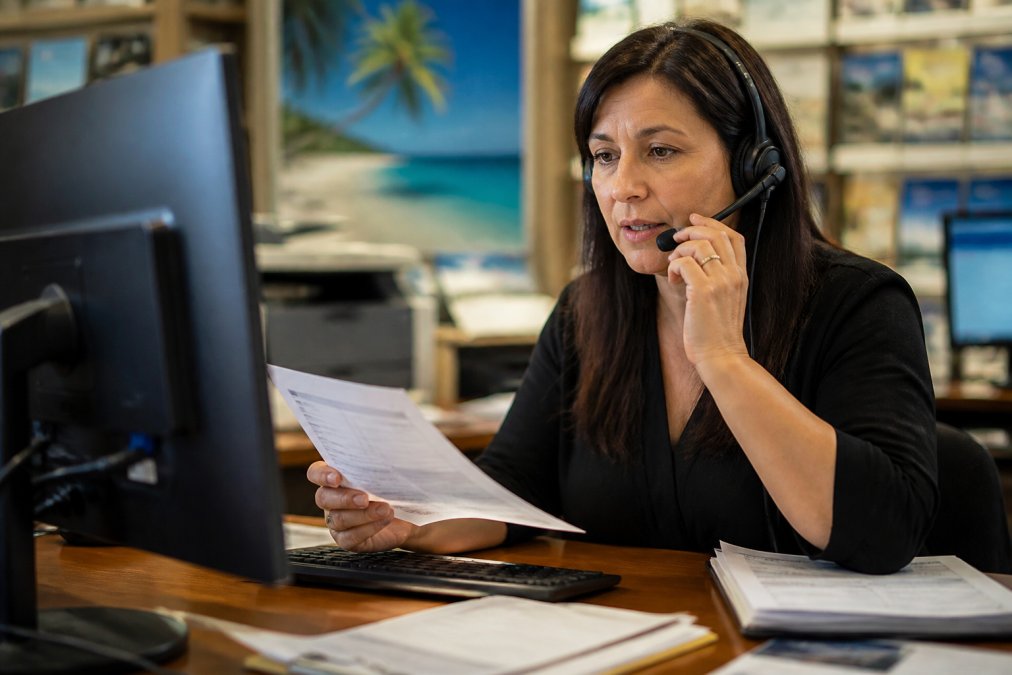
Once a delay is confirmed, rebooking becomes the priority. A GDS (Global Distribution System), Amadeus, Sabre, or Galileo, is the backbone of professional travel booking. Airlines and hotels feed inventory into these systems in real time. Travel agents access them; you cannot. When you use Google Flights or airline websites, you're seeing a limited, delayed version of what's actually available.
When rebooking a delayed passenger, an agent searches the GDS for all available options within your schedule constraints. They're not limited to the airline that delayed you. They can book you on competing carriers, identify the fastest routing, and sometimes find cheaper fares than your original booking.
What the GDS Can Do That You Cannot
The GDS shows real-time seat availability across all flights. When a flight is cancelled and 200 passengers need rebooking, an agent sees exactly which flights have open seats before they're gone. They can also see historical on-time performance data and which airports are experiencing weather delays.
Agents can place you on professional waitlists with priority codes that move faster than consumer waitlists. If a flight is oversold, an agent can work with the airline to secure your seat or offer alternatives.
Waitlist and Ticket Endorsement Strategies
When flights are fully booked, agents use ticket endorsement strategies. A ticket endorsement allows your original ticket to be used on a different airline if your booked carrier can't accommodate you. An agent knows which airlines have endorsement agreements and can structure your rebook to maximize flexibility.
Step 3: Managing Your Itinerary and Connecting Flights
A delayed flight becomes exponentially more complicated with a connecting flight. Missing your connection means being stranded and potentially missing events, meetings, or vacation days.
When you have a connection, an agent's priority is protecting your entire itinerary. They're not just rebooking your first flight; they're rebooking both legs on flights that work together. They check minimum connection times at your hub airport, account for terminal changes, and verify baggage transfers.

For international or complex multi-leg trips, this protection is invaluable. An agent ensures visa requirements are met, hotel reservations align with your new arrival time, and ground transportation is adjusted accordingly.
Understanding Airline Passenger Rights for Delays
Your legal protections during flight delays depend on the delay length, whether the flight is domestic or international, the reason for the delay, and which airline operates it.
For domestic flights, airlines must provide accommodations if your flight is delayed more than three hours: rebooking on the next available flight, meal vouchers, and ground transportation if needed (dot.gov). Airlines often don't volunteer this information.
International flights have different rules. Flights departing from or arriving at US airports fall under different regulatory frameworks with often stronger passenger protections (transportation.gov). Delays caused by mechanical issues, crew scheduling, or airline operational decisions typically trigger stronger protections than weather or security delays. An agent evaluates the stated reason and determines whether you have grounds for compensation claims.
Travel Insurance for Flight Delays: What Agents Coordinate
Travel insurance becomes critical during disruptions. Many travelers purchase it but don't understand what it covers or how to file claims. A travel agent coordinates with your insurance provider to ensure you receive entitled coverage.
Trip delay insurance typically covers expenses when your flight is delayed beyond a specified threshold, often 12 or 24 hours (naic.org). If delayed overnight, insurance may cover hotel accommodations, meals, and ground transportation. An agent from Sand and Sun Travels helps gather necessary documentation, airline delay confirmations, receipts, and proof of impact, and coordinates directly with your insurance company to submit claims promptly.
Travel insurance also covers trip cancellation. If your delay forces you to cancel your trip entirely, insurance reimburses prepaid costs. An agent helps you understand whether your situation qualifies and manages the claim process.
What Happens If Flight Gets Cancelled
A flight cancellation is fundamentally different from a delay. Airlines must rebook you on the next available flight, but that might not depart for hours or days. A cancellation can unravel your entire itinerary.
When a flight is cancelled, an agent immediately activates your backup plan. They're not waiting to see what the airline offers; they're proactively rebooking you on alternative flights, often competing airlines, before the airline's rebooking queue becomes overwhelming. If cancellation happens late evening with no flights until the next day, an agent arranges hotel accommodations and meal vouchers.
For cancellations, passenger rights are typically stronger than for delays. Airlines must rebook you at no additional cost or provide a full refund. An agent negotiates with the airline to find the fastest routing to your destination, even if it requires unexpected connections. If a cancellation forces you to miss events, an agent documents the impact and helps pursue compensation claims.
Beyond the Flight: Hotel, Ground Transportation, and Recovery
When a flight delay or cancellation extends your travel timeline, disruption cascades beyond the flight. Your hotel reservation, rental car pickup, tour bookings, and ground transportation all need adjustment.
A travel agent manages these cascading changes. If you're delayed arriving, they contact your hotel to adjust check-in and confirm your reservation. They communicate with your rental car company to delay pickup without penalty. They notify tour operators that you'll arrive later, rescheduling activities if necessary.
This coordination is essential for international travel. An agent works with hotels and tour operators to provide recovery amenities: room upgrades, meal credits, or activity add-ons to compensate for disrupted experiences. These recovery services are part of what Sand and Sun Travels negotiates through exclusive industry partnerships.
The difference between managing a flight delay on your own and having professional support is the difference between reactive panic and proactive problem-solving. When disruption strikes, a travel agent is already three steps ahead, accessing systems you don't have and protecting your entire trip.
Sand and Sun Travels provides real human support before, during, and after your trip. When your flight delays or cancels, you're not refreshing airline websites alone, you have an advisor who speaks your language, understands your itinerary, and is already working on solutions. Request a quote with Sand and Sun Travels and discover what stress-free travel support actually feels like.
| Disruption Type | Immediate Action | Timeline | Recovery |
|---|---|---|---|
| Delay (1-3 hours) | Monitor and confirm connection viability | Real-time | Continue as planned or rebook if needed |
| Delay (3+ hours) | Rebook alternative flight and arrange accommodations | Within 30 minutes | Hotel, meals, ground transportation covered |
| Cancellation | Rebook on next available flight across all airlines | Within 1 hour | Full rebooking coordination plus recovery services |
| Missed Connection | Rebook entire itinerary and adjust downstream reservations | Immediate | Hotel, meals, activity rescheduling managed |
Frequently Asked Questions
Q: Do travel agents get notified of flight delays before passengers?
A: Yes. Travel agents receive automated notifications through GDS systems and direct airline feeds the moment a delay is logged. Many agents also monitor flights proactively before delays occur. This early warning allows them to begin rebooking and coordinating ground transportation before you even receive an airline text. For international travel and connecting flights, this head start is critical, agents can secure alternative routing while seats are still available.
Q: Can a travel agent rebook a flight faster than I can?
A: Travel agents access GDS systems that show real-time seat inventory, waitlist positions, and ticket endorsement options across multiple airlines simultaneously. You cannot access this system directly. Agents can also contact airline customer service hotlines with priority access codes, negotiate rebooking on partner carriers, and apply special considerations (like keeping families together or honoring meal preferences). This typically saves time compared to calling the airline yourself or using online chat.
Q: What happens if my flight gets cancelled?
A: When a flight is cancelled, your travel agent immediately determines whether it qualifies for compensation, checks your travel insurance for flight delays coverage, and explores all rebooking options. They coordinate your hotel if you're stranded overnight, arrange ground transportation to alternate airports if needed, and document everything for reimbursement claims. They also contact the airline to confirm events (weather, technical outages, crew timeouts) that may affect your compensation eligibility.
Q: How does a travel agent help with airline compensation claims?
A: Agents gather and organize all required documentation: booking reference, original itinerary, proof of delay or cancellation, receipts for meals and accommodation, and correspondence with the airline. They then help with compensation claims, citing relevant regulations and the delay duration. They also coordinate with travel insurance providers to submit claims for additional reimbursement. Agents follow up with airlines and insurers to ensure timely resolution.