 listicle
10 Best Beginner Treks in the World 2026
Table of Contents
- Quick Comparison: Top Beginner Treks at a Glance
- 1. Inca Trail (Peru): The Classic Multi-Day Trek
- 2. Tour du Mont Blanc (France, Italy, Switzerland): Alpine Scenic Wonder
- 3. Kungsleden (Sweden): Wilderness Permit and Nordic Beauty
- 4. Milford Track (New Zealand): Teahouse Trekking and Fjords
- 5. Kilimanjaro (Tanzania): High-Altitude Acclimatization Challenge
- 6. GR20 (Corsica, France): Technical Terrain for Intermediate Beginners
- 7. Annapurna Circuit (Nepal): Budget-Friendly Base Camp Trek
- How to Choose Your First Trek
- Training Plans for Beginners
- Gear Rental vs. Purchase
- Solo Female Traveler Safety
- Why Sand and Sun Travels Stands Out for Adventure Trekking
- Frequently Asked Questions
Last Updated: September 23, 2026
Choosing the right beginner trek transforms anxiety into excitement. Whether you're drawn to ancient ruins, alpine meadows, or tropical fjords, the world offers stunning options designed for people new to long-distance hiking. Sand and Sun Travels helps adventure seekers find and plan beginner treks that match their fitness level, budget, and travel timeline.
The world offers stunning options designed for people new to long-distance hiking, each chosen for accessibility, safety, and unforgettable experiences. These aren't extreme expeditions; they're carefully curated routes where first-time trekkers build confidence while witnessing Earth's most dramatic landscapes.
Quick Comparison: Top Beginner Treks at a Glance
| Trek | Location | Duration | Elevation Gain | Best For | Difficulty |
|---|---|---|---|---|---|
| Inca Trail | Peru | 4 days | 4,200 ft | History buffs | Moderate |
| Tour du Mont Blanc | France/Italy/Switzerland | 10 days | 30,000 ft | Alpine scenery | Moderate |
| Kungsleden | Sweden | 5-7 days | 3,000 ft | Wilderness permit seekers | Easy-Moderate |
| Milford Track | New Zealand | 4 days | 3,600 ft | Teahouse trekking | Moderate |
| Kilimanjaro | Tanzania | 5-7 days | 19,341 ft | High-altitude challenge | Moderate-Hard |
| GR20 | Corsica, France | 15 days | 28,000 ft | Technical terrain | Moderate-Hard |
| Annapurna Circuit | Nepal | 10-12 days | 17,000 ft | Budget-friendly base camp | Moderate |
1. Inca Trail (Peru): The Classic Multi-Day Trek
The Inca Trail remains the world's most iconic beginner trek. Over four days, you'll ascend to 13,100 feet through cloud forests and high-altitude grasslands before reaching Machu Picchu at sunrise. The physical challenge is real but achievable for anyone with moderate fitness.
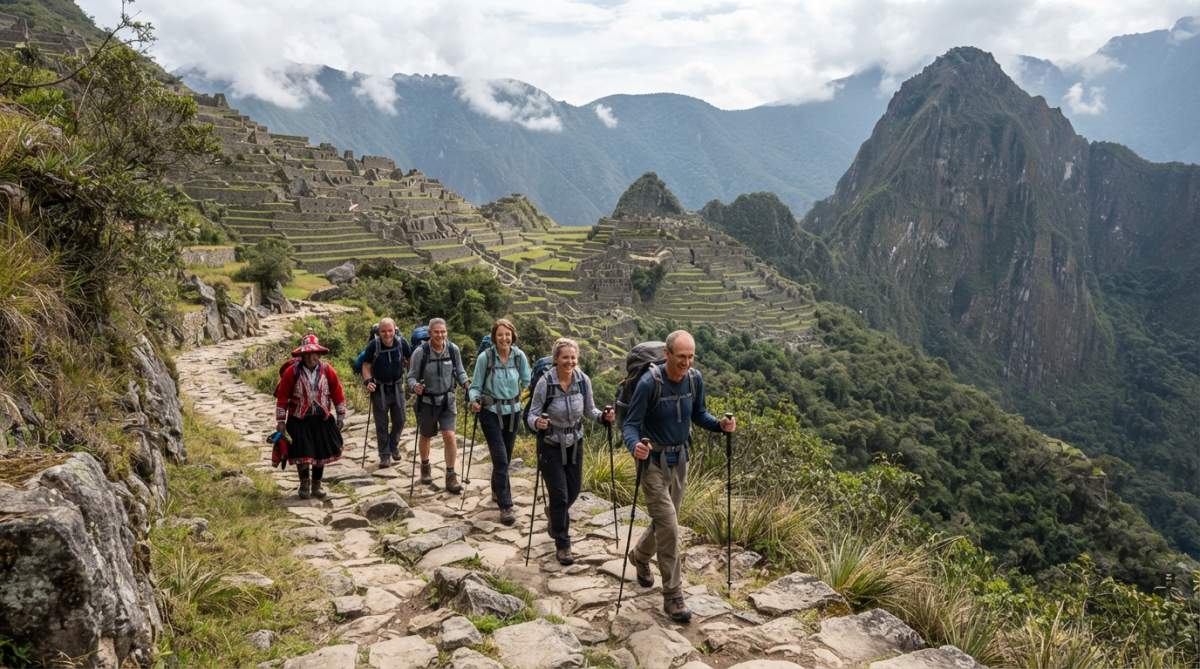
You'll cross mountain passes where the air thins noticeably, requiring acclimatization. Most operators recommend arriving in Cusco three days early to adjust to elevation. The trail is well-maintained with excellent safety infrastructure and clear markers.
A wilderness permit is mandatory and must be booked through licensed operators, which protects the trail's ecosystem and ensures professional guides accompany every group.
Peak season (May to September) means crowded campsites. For fewer people, consider April or October when weather remains stable but crowds thin.
Pros:
- Well-established infrastructure and safety protocols
- Guided experiences include cultural context and historical insights
- Four days is manageable for most fitness levels
- Teahouse-style camping with provided meals
Cons:
- Wilderness permit requirement adds cost
- Peak season crowds diminish the wilderness experience
- Altitude acclimatization is essential, rushing causes discomfort
- Limited flexibility once booked through operators
2. Tour du Mont Blanc (France, Italy, Switzerland): Alpine Scenic Wonder
This 10-day circuit circumnavigates Mont Blanc through three countries, crossing passes above 8,000 feet and descending into villages with cafes and comfortable hotels or mountain huts.
Daily distances are moderate (8-12 miles), but cumulative elevation gain of 30,000 feet demands solid cardiovascular fitness and leg strength.
Self-guided hiking is popular here. Services like Macs Adventure handle luggage transfers between accommodations, so you carry only a day pack. This setup reduces strain and lets you focus on the views rather than logistics.
The trekking season is June through September. July and August offer stability but heavy crowds.
Pros:
- Stunning alpine panoramas and glacier views
- Mix of mountain huts and village hotels for comfort
- Luggage transfer services available
- Three-country experience in one trek
Cons:
- Significant cumulative elevation gain requires strong fitness
- Peak season is crowded
- Weather can change rapidly at altitude
- Costs for hut accommodations and transfers add up
3. Kungsleden (Sweden): Wilderness Permit and Nordic Beauty
Kungsleden stretches across Swedish Lapland. Most beginners tackle the 5-7 day southern section from Abisko to Nikkaluokta, showcasing the region's best scenery without mountaineering experience.
Pros:
- True wilderness with minimal crowds
- No wilderness permit required for wild camping
- Midnight sun extends hiking hours
- Affordable compared to guided treks elsewhere
- Well-marked trail with mountain huts as backup
Cons:
- Long daily distances require solid endurance
- Weather is unpredictable even in summer
- Limited services, bring all supplies or rely on hut meals
- Remote location means limited emergency evacuation options
4. Milford Track (New Zealand): Teahouse Trekking and Fjords
New Zealand's Milford Track exemplifies teahouse trekking: hike daily but sleep in comfortable lodges with prepared meals. Over four days, you'll descend into Milford Sound, one of the world's most dramatic fjords.
Pros:
- Teahouse model eliminates heavy pack carrying
- Stunning fjord scenery unique to New Zealand
- Well-maintained trail with clear signage
- Comfortable lodging and prepared meals
- Manageable daily distances
Cons:
- Wilderness permit is difficult to secure
- Weather is highly unpredictable
- High rainfall means wet conditions frequently
- Limited flexibility once booked
5. Kilimanjaro (Tanzania): High-Altitude Acclimatization Challenge
Mount Kilimanjaro at 19,341 feet is climbable without mountaineering skills, but the challenge is physiological: your body must acclimatize to thin air while maintaining summit energy.
Pros:
- No technical climbing required
- Summit achievement is psychologically powerful
- Hut-based trekking provides comfort
- Guides are experienced with altitude management
- Multiple route options for different preferences
Cons:
- Altitude sickness is a real risk
- Success rate is roughly 60-70%, meaning 30-40% turn back
- Rapid elevation gain stresses the body
- Weather at altitude can be extreme
- Cost is significant for guides and permits
6. GR20 (Corsica, France): Technical Terrain for Intermediate Beginners
The GR20 stretches 112 miles across Corsica's spine. For intermediate beginners with solid hiking experience, the terrain includes scrambling, exposed ridges, and technical sections.
Pros:
- Stunning Mediterranean and alpine scenery
- Technical terrain builds real hiking skills
- Mountain refuges provide social atmosphere
- Less crowded than Alps routes
- Achievable for fit, experienced hikers
Cons:
- Terrain includes exposed scrambling, not for acrophobes
- Cumulative elevation (28,000+ feet) is substantial
- Weather exposure at altitude
- Refuges fill quickly in peak season
- Requires solid navigation skills
7. Annapurna Circuit (Nepal): Budget-Friendly Base Camp Trek
The Annapurna Circuit is a 10-12 day trek offering stunning views, cultural immersion, and exceptional value at $20-40 daily including lodging and meals.
Pros:
- Exceptional value for money
- Teahouse trekking supports local communities
- Stunning mountain scenery and cultural immersion
- Gradual elevation gain aids acclimatization
- No wilderness permit required
- Experienced local guides available
Cons:
- Altitude sickness risk at the Thorung La pass
- Basic lodging amenities
- Diarrhea and altitude-related illness common
- Crowded during peak season
- Limited emergency evacuation infrastructure
How to Choose Your First Trek
Selecting the right beginner trek depends on fitness level, budget, time available, and scenery preference.
Training Plans for Beginners
Most underestimate training required. Here's a realistic 12-week plan:
Weeks 1-4: Build Base Fitness
- Hike 5-10 miles on weekends with elevation gain
- Walk 30 minutes on flat terrain 3x weekly
- Add stair climbing or hill repeats twice weekly
Weeks 5-8: Increase Distance and Elevation
- Weekend hikes: 12-15 miles with 2,000+ feet elevation gain
- Carry weighted pack (15-20 pounds)
- Practice descending to build eccentric strength
Weeks 9-12: Peak Training
- Complete one hike matching your trek's daily distance and elevation with full pack weight
- Practice varied terrain
- Taper the final week
Gear Rental vs. Purchase
Buying all trekking gear costs $1,500-2,500. Renting costs $200-400 per trek. For your first trek, renting makes sense.
Many operators include gear rental.
Solo Female Traveler Safety
Hire a local guide. Beyond navigation and safety, guides provide social cover. Locals are more likely to approach you if you're with a guide, and guides can intervene if situations feel uncomfortable. World Expeditions specifically trains guides in supporting solo female trekkers.
Why Sand and Sun Travels Stands Out for Adventure Trekking
Planning a beginner trek involves dozens of decisions: route selection, permits, guides, timing, and gear.
Frequently Asked Questions
What makes a beginner trek different from an advanced trek?
Beginner treks prioritize accessibility over technical challenge. They feature well-marked trails, moderate elevation gain (under 3,000 feet per day), gradual acclimatization periods, and established infrastructure like lodges or campsites. Advanced treks demand route-finding skills, scrambling ability, high altitude tolerance, and self-sufficiency. Beginner treks typically allow hikers to focus on endurance and enjoyment rather than navigation or technical terrain. Many beginner-friendly routes offer guided options with experienced local guides to enhance safety.
How do I prepare for my first multi-day trekking trip?
Start training 8-12 weeks before your trek by building aerobic fitness through regular cardio and hiking with elevation gain. Invest in proper footwear and test your gear on day hikes. Practice with a weighted backpack to condition your body. Research your specific trek's altitude, weather, and permit requirements. Consider hiring a travel advisor experienced in adventure trips who can handle logistics, secure permits, arrange guides, and provide pre-trip guidance on acclimatization and packing. Physical conditioning combined with professional planning reduces injury risk and increases enjoyment.
Is hiring a travel advisor good for adventure trips?
Yes, especially for first-time trekkers. A qualified travel advisor secures wilderness permits, arranges experienced local guides, handles transportation logistics, and books accommodations suited to your fitness level. They provide pre-trip training recommendations, gear advice, and real-time support if emergencies occur. For complex treks requiring altitude acclimatization or remote access, advisors save time and reduce stress. Bilingual advisors are particularly valuable for international treks where communication with local operators matters. While self-planning is possible, professional guidance significantly improves safety and experience quality.
What's the best trekking season for beginners in 2026?
Optimal trekking seasons vary by location but generally favor shoulder seasons: spring (March-May) and fall (September-November) in the Northern Hemisphere, and November-February in the Southern Hemisphere. These periods offer stable weather, moderate temperatures, and lower altitude sickness risk. Avoid monsoon seasons and extreme winter conditions. Research your specific trek's weather window before committing. Many treks operate year-round, but beginner-friendly seasons minimize exposure to storms, avalanche risk, and extreme cold that could compromise safety or enjoyment.