 ultimate-guide
How to Choose a Luxury Honeymoon Destination
Table of Contents
- Assess Your Travel Style and Priorities
- Best Time of Year for Luxury Honeymoons
- How to Budget for a Luxury Honeymoon
- Match Your Destination to Your Vision
- Honeymoon Travel Advisor Benefits
- Plan Your Booking Timeline
- Finalize Your Luxury Honeymoon Destination
- Frequently Asked Questions
Last Updated: September 24, 2026
Assess Your Travel Style and Priorities
Choosing a luxury honeymoon destination starts with honest self-reflection about what "luxury" means to you. For some couples it means seclusion on a private island; for others, world-class dining and vibrant nightlife. The mistake most couples make is assuming luxury is one-size-fits-all.
Identify your core priorities: adventure, relaxation, cultural immersion, or romance? Do you prefer all-inclusive resorts or bespoke itineraries? Understanding this distinction shapes every decision that follows.
A luxury honeymoon destination should align with how you actually travel. Introverts thrive in secluded retreats; extroverts prefer destinations with strong cultural activities and social opportunities. Sand and Sun Travels specializes in matching couples to destinations that fit their personalities, not generic "best honeymoon" lists.
Best Time of Year for Luxury Honeymoons
Every luxury honeymoon destination has optimal travel windows based on weather, crowds, and pricing. The best time isn't always the most popular time.
Shoulder seasons often deliver superior experiences: smaller crowds, better rates, and more personalized service. The Caribbean's shoulder season (April-May and September-November) offers excellent weather with 30-40% fewer tourists than winter months.
Seasonal climate varies by region. Southeast Asia's dry season (November-February) contrasts with the wet season (May-October), which brings lush landscapes and fewer visitors. European destinations peak in July-August with higher prices; spring and fall offer ideal temperatures and manageable crowds.
Research your destination's climate patterns. Safari lodges operate around wildlife migration (Great Migration: July-October); Polynesian bungalows face cyclone season (June-November). A knowledgeable travel advisor can recommend windows that maximize experience while optimizing budget.
How to Budget for a Luxury Honeymoon
Budget conversations are essential for stress-free travel. Break your budget into categories: flights, accommodation, activities, dining, and contingency.
Determine your total budget, then allocate percentages: accommodation 40-50%, flights 20-30%, activities 15-20%, dining 10-15%, and contingency 5-10%.
All-Inclusive vs. Customized Itineraries: Budget and Experience Trade-Offs
All-inclusive resorts simplify budgeting and reduce financial stress, but often include unused activities and dining options. Many couples find they're paying for experiences they skip.
Customized itineraries offer flexibility but demand constant decision-making. Customized itineraries offer flexibility but demand constant decision-making. Travel advisors reduce overall costs through exclusive rates, resort credits, and VIP upgrades unavailable online.
Sustainability and Ethical Luxury: A Growing Budget Consideration
Ethical luxury travel means aligning your spending with your values, a decision affecting both budget and destination choice.
Luxury properties increasingly offset emissions and operate on renewable energy. Carbon offsets add $50-$300 to international flights. Sustainable resorts cost 10-20% more but appeal to couples wanting their spending to support local economies and conservation.
Ethical luxury means avoiding overtourism and environmental strain. Maldives resorts face rising sea levels and coral bleaching; Seychelles and Mauritius offer similar experiences with stronger environmental protections. Safari destinations with anti-poaching initiatives (Botswana, Kenya) align luxury travel with conservation.
Locally-sourced luxury properties reinvest 60-70% of spending directly into local economies, versus international chains where revenue flows to corporate headquarters. Choosing locally-owned properties ensures your budget supports the destination community.
Currency Fluctuations and Timing
Currency fluctuations significantly impact purchasing power. A 10% favorable shift on a $20,000 honeymoon saves $2,000. Travel advisors monitor exchange rates and recommend booking timing that maximizes your budget.
Match Your Destination to Your Vision
Your luxury honeymoon destination should reflect your relationship, not Instagram aesthetics. Many couples chase beautiful photos rather than destinations aligning with their actual interests and travel style.
Create a vision statement for your honeymoon. What does the perfect day look like? Ocean views and Michelin dining demand different destinations than remote waterfalls and simple local food.
Understanding Luxury Accommodation Types
Luxury honeymoon destinations are defined as much by their accommodation style as by their location. Each type delivers a fundamentally different experience:
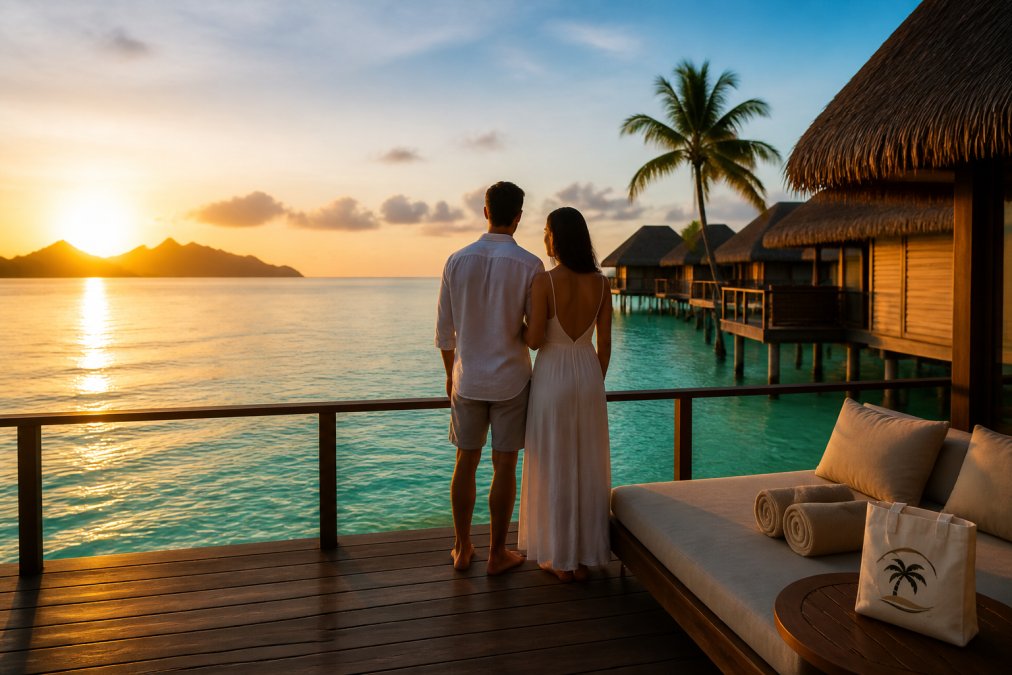
Overwater Bungalows (Polynesia, Maldives, Bora Bora) offer unparalleled privacy and direct ocean access ($800-$3,000+ per night). Trade-offs: limited cultural immersion and potential isolation. Best for couples prioritizing romance and seclusion.
Safari Lodges (Kenya, Tanzania, Botswana, South Africa) combine luxury with wildlife encounters and vast landscapes. High-end safari properties offer game drives, expert naturalists, and intimate dinners under stars. The experience is inherently active and educational. Trade-offs include unpredictable wildlife sightings (no guarantee you'll see specific animals), limited spa amenities compared to resort destinations, and the reality that safari travel involves early mornings and long vehicle hours. Best for adventurous couples who value experiences over passive relaxation.
Boutique Hotels and Luxury City Escapes (Paris, Rome, Barcelona, Tokyo) provide cultural immersion, world-class dining, and walkable neighborhoods. These properties emphasize design, personalized service, and access to museums, galleries, and local experiences. Trade-offs: less privacy than resort settings, potential noise from urban environments, and the need to plan activities rather than having them curated by a resort. Ideal for culturally curious couples who thrive on exploration and dining experiences.
All-Inclusive Luxury Resorts (Caribbean, Mexico, Costa Rica) bundle accommodation, meals, activities, and entertainment into one price. This model eliminates daily spending decisions and provides predictability. Trade-offs: less flexibility to explore beyond resort grounds, potential sameness across multiple all-inclusive properties, and limited access to authentic local dining. Works well for couples who prefer structure and don't want to manage logistics during their honeymoon.
Luxury Villa Rentals and Bespoke Properties (Greek Islands, Tuscany, Bali, Caribbean private islands) offer complete customization and often include private chefs, concierge services, and personalized itineraries. You control your schedule entirely. Trade-offs: require more planning and coordination, lack the staffing of large resorts, and demand higher engagement from the couple. Best for experienced travelers who know exactly what they want and enjoy hands-on planning.
Geographic Variety and Hybrid Destinations
Europe offers historic cities, romantic countryside, and coastal charm. Asia delivers luxury resorts, spiritual experiences, and culinary adventures. Africa provides luxury safari lodges and unique wildlife encounters. Oceania features overwater bungalows, pristine beaches, and tropical seclusion. Caribbean destinations combine beach relaxation with vibrant culture and water activities.
Consider hybrid destinations that combine multiple accommodation types and experiences. Costa Rica offers rainforest adventures via eco-lodges, beach relaxation at luxury resorts, and adventure activities. Thailand blends luxury resort experiences with cultural immersion in Chiang Mai and island escapes in Phuket. The key is matching your vision to destinations that deliver it authentically through the right accommodation type, not destinations that merely look good in photos.
Honeymoon Travel Advisor Benefits
Booking your luxury honeymoon destination independently through online platforms feels straightforward until something goes wrong. A flight cancels. The resort loses your reservation. You arrive at a restaurant to find it closed for a private event. Suddenly, you're managing a crisis during what should be your most romantic week.
Travel advisors provide real human support when you need it most. Before your trip, they handle complex logistics: flight routing, visa requirements, travel insurance, and activity reservations. During your honeymoon, they're available if issues arise. After your return, they follow up to ensure everything met expectations.
The exclusive access advantage is substantial. Travel advisors secure VIP upgrades, resort credits, and curated experiences unavailable through standard booking channels. These aren't minor perks. A room upgrade from standard to suite, complimentary spa treatments, or priority restaurant reservations transform a good honeymoon into an unforgettable one. Luxury resorts reserve these benefits for travel partners who consistently deliver high-value bookings.
Bilingual support matters for couples with multilingual families or those traveling to non-English-speaking countries. Sand and Sun Travels provides fluent English and Spanish advisors who can communicate directly with local operators, hotels, and tour companies.
Plan Your Booking Timeline
Timing your booking affects both availability and pricing. The optimal booking window for luxury honeymoon destinations varies by season and destination, but generally falls 3-6 months before travel for peak seasons and 6-12 weeks for shoulder seasons.
Finalize Your Luxury Honeymoon Destination
After assessing your priorities, evaluating timing, budgeting realistically, and matching your vision to geographic options, you're ready to commit. The final step involves confirming logistics with precision.
Frequently Asked Questions
How far in advance should I book a luxury honeymoon destination?
Booking 6-9 months ahead is ideal for securing premium accommodations and exclusive rates at high-end resorts. Peak season destinations may require even earlier booking. A travel advisor can help you identify the optimal booking window for your chosen luxury honeymoon destination and lock in VIP upgrades before they're claimed.
What's the difference between booking a luxury honeymoon myself versus using a travel advisor?
Online booking engines show published rates, but travel advisors access exclusive amenities, room upgrades, resort credits, and perks unavailable to direct bookers. Beyond pricing, advisors manage logistics, handle changes, and provide 24/7 support during your trip. For a luxury honeymoon, this personalized service transforms stress into seamless enjoyment.
Is $5,000 enough for a luxury honeymoon?
Budget depends on destination, duration, and amenities. A week in a boutique hotel with mid-range luxury might fit $5,000, while overwater bungalows or exclusive safari experiences typically require $8,000-$15,000+. A honeymoon travel advisor can help you understand what 'luxury' means at different price points and find the best value for your budget.
What are the most common mistakes couples make when choosing a honeymoon destination?
Common mistakes include picking destinations based on Instagram appeal rather than actual preferences, ignoring seasonal weather patterns, underestimating travel time and jet lag, and booking all-inclusive packages that don't match your interests. Couples also overlook customization options that could enhance their experience. Working with a travel advisor helps you avoid these pitfalls and choose a destination that truly fits your vision.