 listicle
Benefits of Booking Direct for Hotel Perks
Table of Contents
- Why Booking Direct Unlocks Hotel Perks OTAs Can't Match
- Book Hotel Direct vs OTA: A Perk-by-Perk Comparison
- How to Ask for a Hotel Room Upgrade When You Book Direct
- Hotel Loyalty Points and Third-Party Booking: What You Need to Know
- Hotel Booking Cancellation Policy Comparison: Direct vs. OTA
- When Booking Direct Isn't the Best Choice
- How a Travel Advisor Can Secure Even More Perks
- Conclusion: Get More from Every Hotel Stay
- Frequently Asked Questions
Last Updated: October 6, 2026
Why Booking Direct Unlocks Hotel Perks OTAs Can't Match
Booking direct is the most reliable way to unlock hotel perks third-party sites cannot offer. Reserving through the hotel's own website, phone line, or a travel advisor puts you in the property's loyalty ecosystem instead of a middleman's database, the difference between getting the free breakfast, room upgrade, or flexible cancellation and missing out.
Here's the part most travelers miss: an online travel agency is a reseller.
At Sand and Sun Travels, we book clients directly into properties every week, and the pattern is consistent: the guest with a direct reservation is treated as the hotel's own customer, while the guest arriving via a third-party confirmation often gets the leftover room.
Book Hotel Direct vs OTA: A Perk-by-Perk Comparison
The book hotel direct vs OTA decision comes down to who controls your reservation record. Direct bookings give the hotel full control, so it can add value freely. OTA bookings sit behind a contract that often blocks the front desk from modifying your rate, room, or dates.
| Perk | Booking Direct | Booking via OTA |
|---|---|---|
| Loyalty points | Earned and credited | Usually excluded |
| Member rate | Available | Not available |
| Room upgrade | Requested and often granted | Rarely honored |
| Free breakfast | Common perk | Typically not included |
| Cancellation changes | Handled by hotel | Must go through OTA |
| Special requests | Noted on your profile | Often lost in transit |
| Problem resolution | Hotel fixes it directly | OTA mediates, slowly |
The pattern holds across hotel types, though independent hotels tend to be more generous with direct guests than large chains bound by corporate rate rules.
Comparing Loyalty Points and Member Rates
Loyalty points are the clearest financial reason to book hotel direct. Most major hotel loyalty programs only award points on reservations made through the brand's own channels, book on an OTA and you typically earn nothing toward your next stay. Member rates work the same way: hotels publish a lower rate for signed-in loyalty members, invisible to anyone arriving from a third-party site, and the gap often covers a meal or a spa treatment.
Flexibility and Cancellation Policies
Cancellation flexibility is where direct bookings quietly win. When you book direct, the hotel owns your reservation, so a date change or cancellation is one call to the front desk; book through an OTA and the hotel often cannot touch your booking at all. That matters most when plans shift, a moved flight, a sick child, a work trip landing the same week.
How to Ask for a Hotel Room Upgrade When You Book Direct
Learning how to ask for a hotel room upgrade starts with booking the right way. Upgrades are granted at the hotel's discretion, and the hotel can only exercise that discretion on reservations it controls.
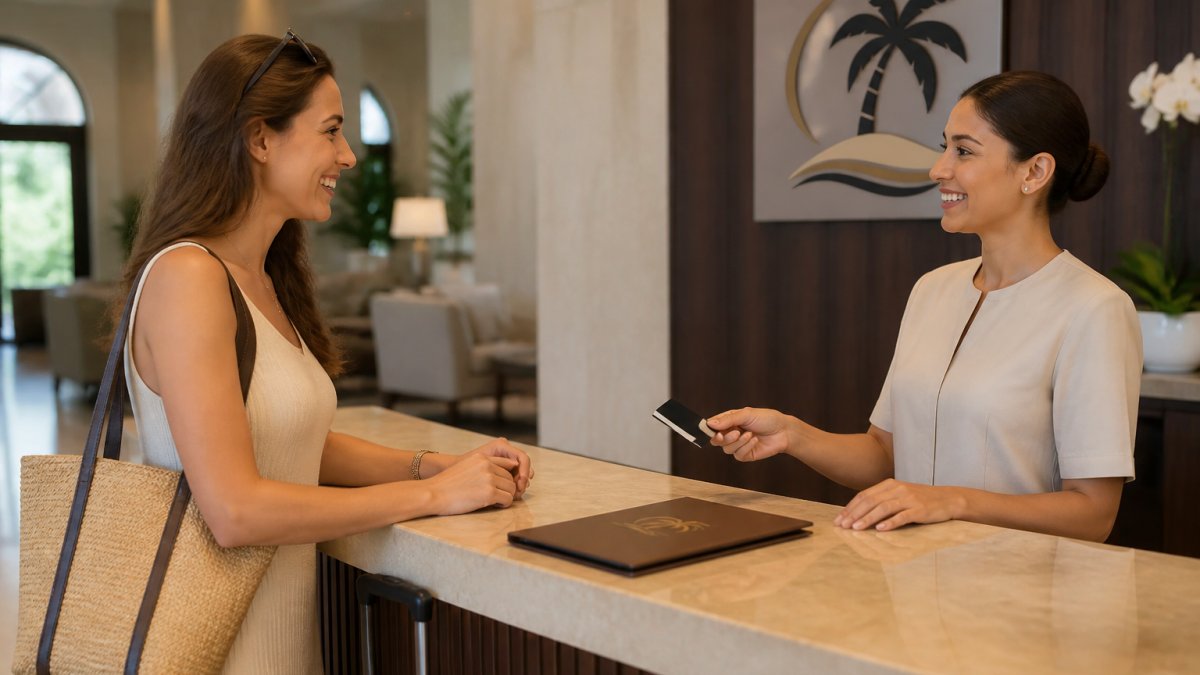
Timing, framing, and follow-up decide whether the ask lands. Here's the sequence that works, plus how to document any promise so it survives the handoff between shifts.
Before You Book
- Book direct first. An upgrade request on an OTA reservation usually goes nowhere, because the front desk cannot modify a third-party rate or room assignment.
- Join the loyalty program before you arrive. Even entry-level membership puts your preferences on a profile the agent can read.
- Check the room category you're booking. Upgrades move you one tier up, not to the top of the house, book the lowest category and expect the next one, not the suite.
At Check-In
- Ask in person, not by email. Front desk agents see real-time availability and same-day cancellations that a reservations inbox cannot.
- Lead with flexibility. "If anything opens up, we'd be grateful" works better than "we expect an upgrade", it gives the agent a reason to help, not a demand to refuse.
- Name the reason, briefly. A birthday, anniversary, or long travel day is a legitimate, low-cost reason to move you. Keep it to one sentence.
How to Get the Perk Confirmed in Writing
This is the step most guides skip, and it's the one that protects you. A verbal upgrade at check-in is fine, but anything promised before arrival, a room type, credit, or breakfast inclusion, should be documented.
- Ask for a confirmation email restating the upgrade or amenity in the reservation record.
- Check your confirmation before you travel. If the upgrade isn't listed, reply and ask the hotel to add it to the reservation notes.
- Screenshot the confirmation and keep it on your phone, if a different agent checks you in, the record is your proof.
One honest limitation: upgrades are never guaranteed. A fully booked hotel has nothing to give, no matter how politely you ask. The goal isn't to force an upgrade, it's to make sure that when inventory exists, you're the guest the hotel chooses to move.
Hotel Loyalty Points and Third-Party Booking: What You Need to Know
Hotel loyalty points and third-party booking rarely mix. Most programs explicitly exclude OTA reservations from earning, and some exclude them from redemption credit too. The rule exists for a reason: hotels fund loyalty programs from the margin they keep on direct bookings, and when a third party takes a commission, there's no margin left to fund your points.
A few practical points to keep in mind:
- Points earned on direct stays typically post within a few days of checkout.
- Missing points are far easier to claim when the reservation was made directly.
- Some programs let you redeem points for a stay but won't let you earn on an OTA booking in the same trip.
If you're chasing a specific status tier, book every night direct. The occasional OTA bargain can cost you a tier you were one stay away from reaching.
Hotel Booking Cancellation Policy Comparison: Direct vs. OTA
A hotel booking cancellation policy comparison usually reveals the same thing: published terms can look identical, but who you call when plans change is completely different. The gap isn't the wording, it's who has the authority to bend it. Direct bookings route through the hotel's own reservations team, which can see actual occupancy and make judgment calls a call center cannot.
| Scenario | Direct Booking | OTA Booking |
|---|---|---|
| Change dates | One call to the hotel | Support ticket, then wait |
| Cancel within window | Usually free | Depends on OTA terms |
| Cancel outside window | Often waived for loyal guests | Fee almost always applies |
| No-show dispute | Hotel decides | OTA decides, hotel has no say |
| Refund timing | Processed by hotel | Processed by OTA, slower |
How to Compare Cancellation Terms Like-for-Like
The trap is comparing headline rate against headline rate. A refundable direct rate and a non-refundable OTA rate are not the same product, and the cheaper number often isn't cheaper once you price the risk.
Before you book anywhere, line up these four items side by side:
- The cancellation deadline. Note the exact date, time, and the property's time zone, not yours. A "48 hours before arrival" window can expire while you're still at work.
- The penalty amount. Some policies charge one night; others the full stay. The difference matters most on long bookings.
- Whether the rate is refundable at all. Many OTA "deals" are prepaid and non-refundable, the low price is the trade for zero flexibility.
How to Verify the True Total Price
The rate you see is rarely the rate you pay. Resort fees, destination fees, and local taxes are frequently added at checkout and can change which option is actually cheaper, a lower OTA headline rate often loses its edge once mandatory fees are added.
- Read the fee breakdown before you enter payment details. If a site won't show the total until the last step, treat that as a warning sign.
- Check whether the member rate is eligible for your dates. Some member rates carry blackout dates or minimum-stay requirements the public rate does not.
- Confirm what the price includes. Breakfast, parking, and resort credits are sometimes bundled into a direct rate and excluded from an OTA rate, narrowing or reversing the gap.
The takeaway isn't that OTAs are dishonest. It's that they're a layer between you and the people who can actually help, and the only fair comparison is total price against total terms, not one headline number against another.
When Booking Direct Isn't the Best Choice
Booking direct is not always the right call. There are real situations where a third-party site wins.
For a one-night airport stay with no loyalty program and no intention of returning, the OTA's lower headline price may genuinely be the better deal, the perks you'd forfeit have no value to you.
Other cases where an OTA can make sense:
- Deep last-minute discounts on unsold inventory at properties you'll never revisit.
- Bundled flight-and-hotel packages where the combined price beats booking separately.
- Price comparison across many properties when you have zero brand preference.
The honest framing: book direct when perks, points, or flexibility matter to you. Book through a third party when the only thing that matters is the lowest possible number for a single night.
How a Travel Advisor Can Secure Even More Perks
A travel advisor can often secure perks even a direct booking cannot, because advisors book through trade channels with negotiated amenities, not public rates, and not available on any consumer booking site.
Sand and Sun Travels works through these channels every day.
What that looks like in practice:
- Resort credits applied to your folio before you arrive.
- Complimentary breakfast for two, confirmed in writing.
- Room upgrades requested through the property's trade contact, not a call center.
The other half of the value is human support: if a flight cancels or a resort loses a reservation, you have a real person to call.
Conclusion: Get More from Every Hotel Stay
The perks of booking direct are real, but they only show up when you book through a channel that lets the hotel treat you as its own guest.
Where a direct booking stops, a travel advisor picks up. Sand and Sun Travels pairs direct-booking perks with negotiated resort credits, VIP upgrades, and exclusive amenities, plus bilingual support in English and Spanish before, during, and after your trip.
Frequently Asked Questions
What are the benefits of booking a hotel directly?
Booking direct often means you can earn loyalty points, access member-only rates, and get priority for room upgrades. You also have more flexibility with changes and cancellations because you're dealing directly with the hotel, not a third party. Many hotels offer complimentary breakfast or free drinks as a thank-you for booking on their website. Plus, you can communicate special requests like a quiet room or early check-in more easily.
Do hotels give better perks when you book directly?
Yes, hotels typically reserve their best perks for direct bookings. This can include room upgrades, late checkout, welcome amenities, or bonus loyalty points. Third-party sites often don't pass on these benefits because the hotel sees them as a different booking channel. If you want the VIP treatment, booking direct or through a travel advisor with hotel partnerships is the way to go.
Can you earn hotel loyalty points when booking through a third-party site?
Most hotel loyalty programs do not award points for stays booked through third-party sites like Expedia or Booking.com. To earn points, you generally need to book directly with the hotel or through an approved travel agent. Some exceptions exist, but they're rare. If earning points matters to you, always check the program's terms before booking.
How do I ask for a hotel room upgrade when booking direct?
Ask politely at check-in or include a request in your reservation notes. Mention your loyalty status if you have one. Being flexible with your arrival time can help. You can also call the hotel a day before arrival to confirm your request. If you're working with a travel advisor, they can often secure an upgrade on your behalf through their industry connections.