 how-to
What to Say to Get a Hotel Room Upgrade
Last Updated: October 23, 2026
Quick Summary
To get a hotel room upgrade, ask politely and specifically at check-in on a day when the hotel isn't full, using a short script like "If a higher room category opens up, we'd be grateful to be considered." Name your booking, state one preference, and leave the decision with staff. Occupancy and inventory decide more upgrades than any script.
- Ask for a higher room category instead of a free upgrade so it sounds like a preference, not a demand.
- Send a hotel upgrade request email after booking, ideally a few days before arrival, in three to five sentences.
- Ask mid-afternoon rather than at midnight, since staff have more room inventory earlier in the day.
- If denied, thank staff and ask once whether anything may open up later in the stay.
- Ask once at check-in with no more than one follow-up, because repeated requests read as pressure.
Table of Contents
- Why a Hotel Room Upgrade Comes Down to Wording and Timing
- A Hotel Room Upgrade Request Script for Every Situation
- How to Write a Hotel Upgrade Request Email Before You Arrive
- The Best Time to Ask for a Hotel Upgrade
- What to Say at Check-In and How to Handle a Denial
- Asking for a Hotel Room Upgrade for a Special Occasion
- When to Ask About a Paid Upgrade and How to Judge Its Value
- Frequently Asked Questions
Why a Hotel Room Upgrade Comes Down to Wording and Timing
A hotel room upgrade is rarely about luck. It comes down to three things: how you ask, when you ask, and what the front desk has available that day.
At Sand and Sun Travels, we book hotel stays for couples and families every week. The pattern is clear.
Most guides get this wrong. They treat upgrades as a magic trick.
Here's what matters most:
- Wording: friendly, brief, and specific
- Timing: low occupancy and early arrival help
- Use: loyalty status, direct bookings, and repeat stays
American Hotel & Lodging Association industry data shows how full hotels run in peak periods, which tells you a lot about your chances.
A Hotel Room Upgrade Request Script for Every Situation
A hotel room upgrade request script is a short, polite set of sentences you can adapt to email, phone, or the front desk. The best scripts name your booking, state a preference, and leave the decision with staff.
Use these as starting points and swap in your own details.
- Email, general: "We're looking forward to our stay on [dates]. If a higher room category opens up, we'd be grateful to be considered."
- Phone call: "Hi, this is [name], booking [number]. I wanted to ask if an upgrade might be possible closer to arrival."
- Check-in: "Thank you. If anything with a better view is open, we'd love to be considered."
- Loyalty angle: "I've stayed with you a few times and always enjoy it. If an upgrade is available, that would make the trip."
- Special occasion: "We're celebrating [occasion] on this trip. If an upgrade is possible, it would mean a lot."
Notice what none of these do: they don't demand, they don't name a price, and they don't put staff on the spot.
How to Write a Hotel Upgrade Request Email Before You Arrive
A hotel upgrade request email works best when it's short. Three to five sentences is plenty.
Send it after you book, ideally a few days before arrival. Include your reservation number, stay dates, and one clear line about what you'd like.
Here's a template you can copy:
Subject: Upgrade request, reservation [number], [dates]
Hello,
My name is [name] and I have a reservation for [dates] under [booking name]. We're very much looking forward to the stay.
If a higher room category becomes available, we would be grateful to be considered. We're flexible on room type and happy to hear what works.
Thank you for your time.
[Name] | [phone]
Two rules keep this email effective. Keep it polite, and never ask for a specific suite by name. That reads as a demand.
For a full template with examples, see our guide on how to write a hotel upgrade request email.
The Best Time to Ask for a Hotel Upgrade
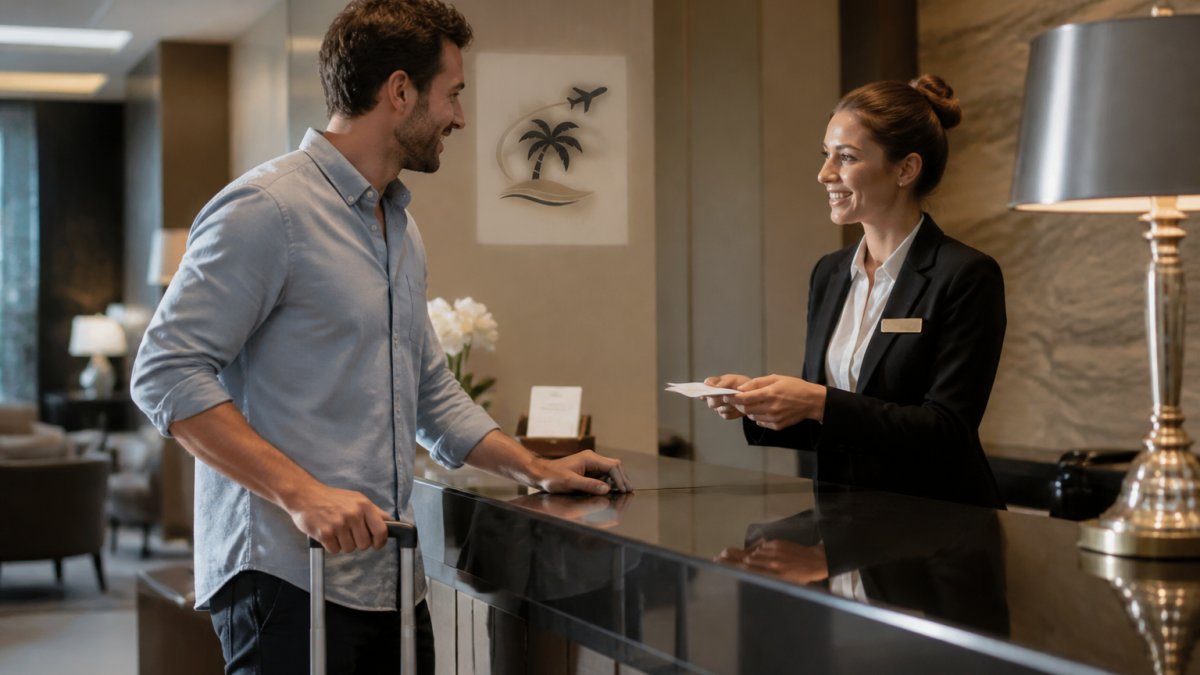
The best time to ask for a hotel upgrade is at check-in, on a day when the hotel isn't full. Occupancy drives everything. When rooms sit empty, staff have room to move you up.
Timing tips that actually work:
- Ask mid-afternoon, not at midnight. Staff have more room inventory to work with earlier in the day.
- Arrive early, but not too early. Around standard check-in time gives staff flexibility.
- Avoid peak season and sold-out weekends. Inventory is the whole game.
- Ask once. A polite follow-up is fine. Repeated asks annoy the desk.
If you want a deeper look at timing, including the best time of day to check in, read our breakdown on the best time of day to check in for room upgrades.
Occupancy and inventory decide more upgrades than any script. A friendly request on a quiet Tuesday beats a perfect script on a sold-out Saturday.
What to Say at Check-In and How to Handle a Denial
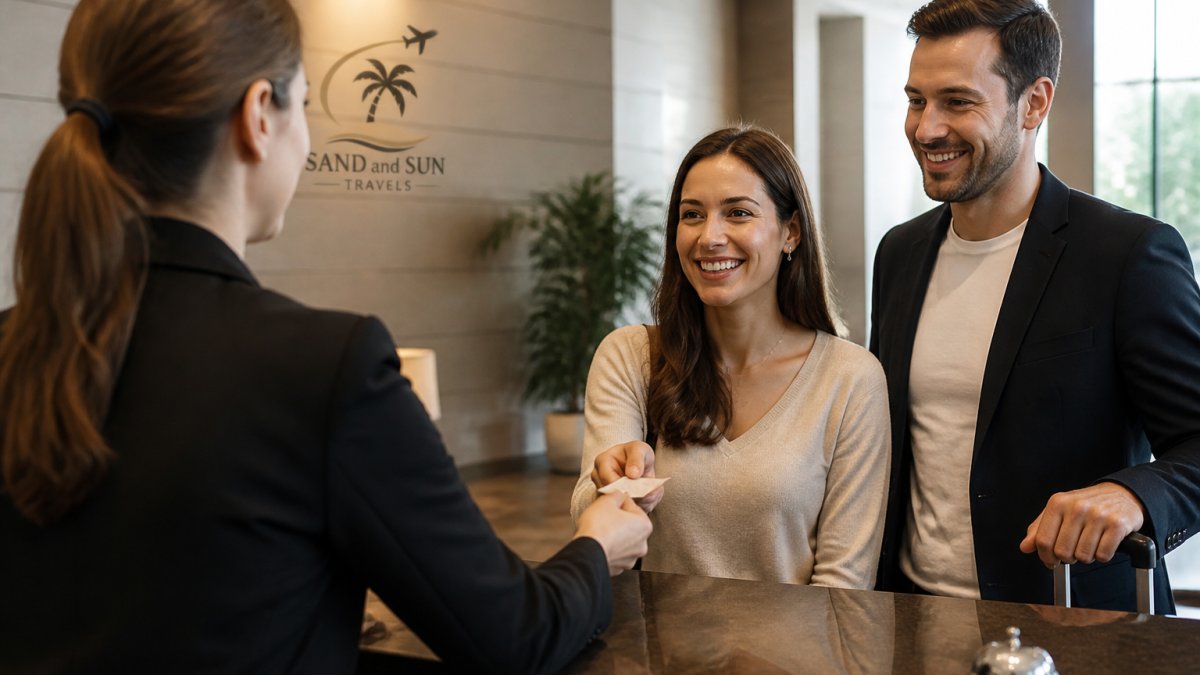
At check-in, keep it to one friendly sentence. Thank the staff member, confirm your booking, then ask.
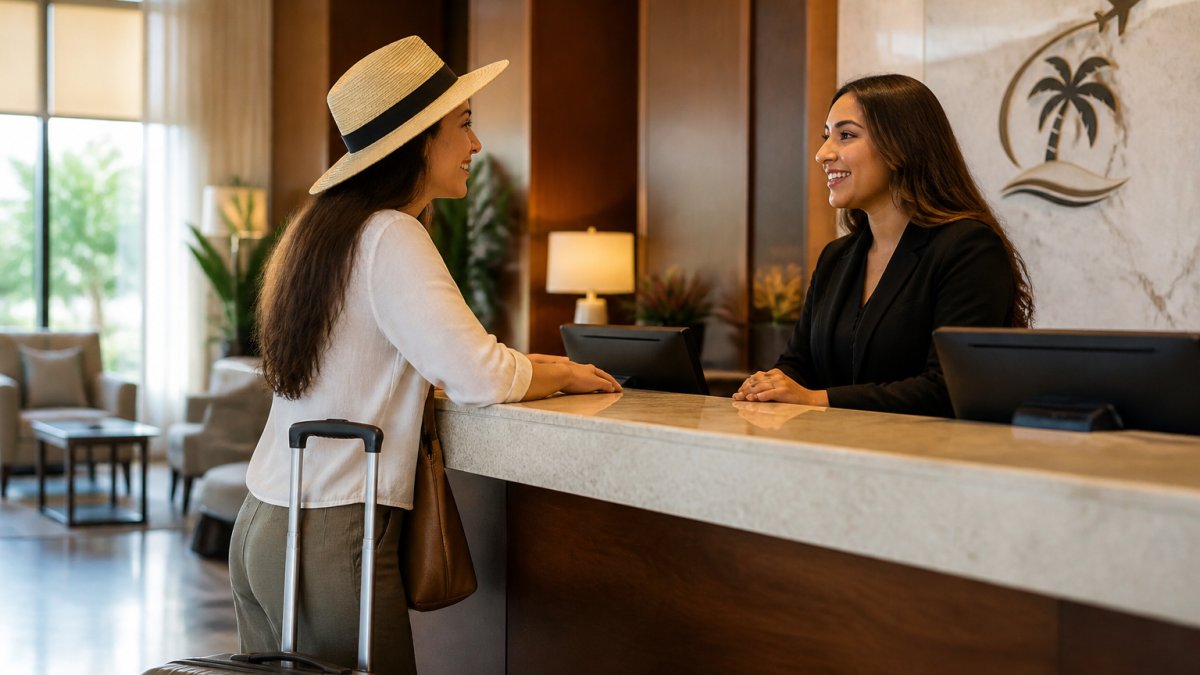
Then stop talking. Let them check.
What you say next depends on the answer.
If you have no loyalty status and just want a better room: "Hi, checking in under [name].
If you're traveling for a special reason (keep it brief): "We're celebrating our anniversary this trip.
Notice the pattern: thank them, state the preference once, and explicitly release the pressure. That last part matters.
If the answer is no
A denial is normal. Most requests are declined, especially on sold-out nights. How you respond matters more than the ask itself.
Say thank you, then ask one useful question: "Is there anything available later in the stay if something opens up?"
That single question sometimes turns a no into a yes two days later. It also keeps the relationship warm.
If you want to follow up in writing, send a short email the next morning: "Thank you for checking us in yesterday.
When to stop asking
Ask once at check-in. If the answer is no, you can ask one follow-up later in the stay, but not more than that. Repeated requests read as pressure and can backfire. If the hotel is sold out, accept it and enjoy the room you booked. Gracious guests get remembered, and sometimes get moved up on a future stay.
For specific wording and front-desk tactics, our guide on how to ask for a free suite upgrade at check in goes deeper.
Asking for a Hotel Room Upgrade for a Special Occasion
A hotel room upgrade for a special occasion works because staff want guests to have a good trip. Honeymoons, anniversaries, and birthdays give them a reason to say yes.
Mention the occasion once, honestly, and keep it low-key. "We're celebrating our anniversary this trip" is enough. Don't oversell it or hint at gifts.
What helps:
- Tell the hotel in advance, not just at the desk
- Keep the tone warm, not entitled
- Thank staff by name when they help
Scripts for the three most common occasions
Anniversary (email or at check-in): "We're celebrating our anniversary on this trip.
Honeymoon (email before arrival): "We'll be on our honeymoon during this stay. If an upgrade is possible, we'd be grateful, and if not, we're just looking forward to being there."
Birthday (at check-in): "It's my partner's birthday this weekend. If anything with a better view opens up, we'd love to be considered. No worries if not."
The pattern is the same: name the occasion, ask once, and release the pressure.
How hotels actually flag celebrations
Most hotels have a way to note special occasions on a reservation, a comments field in the booking system, a note added by the front desk, or a flag set by a travel advisor. That note is what staff see when they review arrivals.
The practical move: add the occasion to your reservation when you book, or email the hotel a few days before arrival with your reservation number and one line about the celebration. That gives the front desk time to see it before you arrive.
What not to do
- Don't claim a celebration that isn't real. Staff remember repeat guests, and a fake anniversary is awkward to walk back.
- Don't ask for a specific suite by name. It reads as a demand and puts staff on the spot.
- Don't mention gifts, cards, or decorations unless the hotel offers them. The ask is for a room, not a package.
For honeymoon-specific scripts and tips, see our guide on honeymoon room upgrade tips.
Couples who book through a travel advisor often get this handled for them. At Sand and Sun Travels, our advisors flag celebrations with hotel partners before arrival, which is one reason clients like Sarah and James M. told us their honeymoon turned out "even better than we imagined."
When to Ask About a Paid Upgrade and How to Judge Its Value
A paid upgrade is sometimes the smarter move. If the hotel is full, a complimentary upgrade won't happen.
Ask one question at the desk: "Is there a paid upgrade available, and what would it cost per night?" Then judge it on three things:
- The nightly difference: is it a small step up or a big jump?
- What you actually get: space, view, lounge access, or a better room type
- How long you'll use it: a two-night stay rarely justifies a big fee
| Situation | Ask for | Why |
|---|---|---|
| Low occupancy, no status | Complimentary upgrade | Inventory is open |
| Full hotel, flexible budget | Paid upgrade | Free rooms are gone |
| Short stay, small fee | Paid upgrade | Low total cost |
| Long stay, big fee | Skip it | Cost adds up fast |
Booking direct often affects what's offered. Our post on the benefits of booking direct for hotel perks explains how that works before you decide.
Getting a hotel room upgrade is a skill, not a secret. Ask politely, pick your timing, and handle a no with grace.
That's also where a travel advisor earns their keep.
Ready to travel with backup? Get started with Sand and Sun Travels and let our team request the upgrade for you.
Frequently Asked Questions
Can I ask a hotel for a room upgrade?
Yes, you can ask, and front-desk staff expect the question. A polite request costs nothing and sometimes works, especially when occupancy is low or you have loyalty status. Frame it as a question rather than a demand: mention your booking, then ask whether a higher room category might be available. Keep your expectations realistic. A complimentary upgrade is never guaranteed, and the hotel may instead offer a paid upgrade at a discounted rate. Either way, asking respectfully leaves a good impression and keeps the door open for your next stay.
Is it better to request a hotel upgrade before arrival or at check-in?
Both can work, and using them together is smartest. Send a hotel upgrade request email a few days before arrival so the front desk can note it on your reservation, then mention it briefly at check-in. Pre-arrival requests give staff time to check inventory and plan, while a friendly reminder at the desk puts a face to the name. Avoid calling repeatedly or pushing hard; one email plus one polite mention at check-in is the right balance. If the hotel is full, staff will remember your courtesy rather than your persistence.
What should I do if the hotel says no to my upgrade request?
Accept it graciously and ask about alternatives. Say thank you, then ask whether a paid upgrade is available or whether a room with a better view might open up later in your stay. You can also ask to be noted for any cancellations. Never argue or imply the denial is unfair, since upgrade eligibility depends on occupancy, booking rate, and loyalty status. A warm response often earns small perks like a late checkout or a welcome amenity. Follow up once, politely, the next morning if your stay is longer than a few nights.
Can hotel loyalty status help me get a room upgrade?
Yes. Elite status and repeat stays are among the strongest factors in upgrade eligibility. Hotels track guest history, and front-desk staff can see your tier, past stays, and booking rate when they review your reservation. Mention your loyalty program politely rather than reciting your tier number, and book directly with the hotel so your status attaches to the reservation. Status does not guarantee an upgrade, particularly in peak season, but it moves you up the priority list when inventory allows.